Proudly serving Scottsdale, Mesa, Tempe, Phoenix, Chandler, Gilbert & surrounding areasCall or Text 24/7: 602-905-5399
Aerial view of a paved asphalt parking lot at an office complex in Scottsdale, AZ with desert mountains in the distance.

Asphalt Resurfacing and Overlay Services in Scottsdale, AZ

Scottsdale Asphalt specializes in asphalt resurfacing overlay for driveways, parking lots, commercial properties, and residential communities in Scottsdale AZ. We restore worn pavement with asphalt overlay installation, mill and overlay, crack repair, pothole repair, sealcoating, line striping, base repair, and pavement preservation services. Our team prepares each existing surface before placing new hot mix so the finished pavement bonds correctly and drains the way it should. For property owners across Scottsdale, that means a smoother surface without the cost and disruption of tearing everything out when the base is still sound.

Scottsdale's desert climate pushes pavement hard, with summer temperatures regularly exceeding 110°F, intense UV exposure, and major day-to-night temperature swings. That heat and sun can turn flexible asphalt binder gray, brittle, and cracked long before a cooler-climate surface would fail. We focus on the details that matter locally: durable asphalt mix, uniform tack coat, grade correction for water flow, and compaction to the thickness needed for the traffic load. When surface damage is addressed before the base fails, an overlay can help a pavement system perform for 15 to 20 years with the right maintenance.

From a 200,000-square-foot shopping center parking lot near Old Town to a residential driveway in McCormick Ranch, our crews match the resurfacing plan to the pavement condition, traffic pattern, and drainage requirements. Every estimate explains what prep work is required before paving, including crack sealing, soft-spot repair, milling, or edge transitions when needed.

Scottsdale Asphalt provides asphalt resurfacing and overlay services throughout Scottsdale, Paradise Valley, Tempe, Mesa, Chandler, Gilbert, Phoenix, and the greater Phoenix metro area.

★ ★ ★ ★ ★5/5 Customer Rating · 26 Years in the Asphalt Trade · Thousands of Paving Jobs Completed · Licensed, Bonded & Insured · Homes, Businesses & Commercial Sites

Asphalt Overlay Services & Benefits

What Is Asphalt Resurfacing Overlay?

An asphalt overlay installs a new layer of hot mix asphalt directly over an existing pavement surface after the old surface has been cleaned, repaired, and prepared. It is designed for driveways, parking lots, and private pavement areas where the existing base is still structurally sound but the top mat has oxidation, raveling, minor cracking, or shallow depressions.

Full depth replacement is different because the entire asphalt structure is removed down to the aggregate base or subgrade, then rebuilt from the bottom up. Overlay avoids that level of excavation when the foundation is stable, which can reduce disruption, material removal, and project cost compared with starting over.

The key decision is whether the damage is limited to the surface or whether the base has failed. Widespread alligator cracking, heaving, subsidence, or pavement that flexes under traffic usually points to deeper structural problems that need more than a surface overlay.

Benefits of Asphalt Overlay

Asphalt resurfacing overlay is a practical way to restore pavement appearance and performance when the existing foundation can still carry traffic. The right preparation, thickness, drainage correction, and maintenance plan help the new mat resist Scottsdale heat, UV exposure, and monsoon-season water intrusion.

  • Restores a smooth, dark driving surface without full-depth tear-out when the base is sound.
  • Addresses surface oxidation, minor cracking, rough texture, and shallow depressions in the top pavement layer.
  • Uses tack coat to bond the new asphalt mat to the prepared existing pavement.
  • Can include milling at edges, garage transitions, utility covers, or high spots to prevent lip buildup.
  • Improves water flow when grade correction establishes proper slope before paving.
  • Often creates less disruption than full replacement, with typical overlay work completed in 1-2 days instead of 3-5 days or more.
  • Can extend pavement life 12-20 years in Scottsdale climate when installed and maintained correctly.
  • Pairs with crack repair, pothole repair, sealcoating, and line striping for a complete pavement refresh.
Overlay Services

Asphalt Resurfacing Overlay Services

Scottsdale Asphalt handles the preparation, repair, paving, and finishing work that an overlay project needs to last. Our resurfacing services are built around the actual condition of the pavement, from residential driveways to commercial lots with delivery traffic and tenant access concerns.

Asphalt Overlay Installation

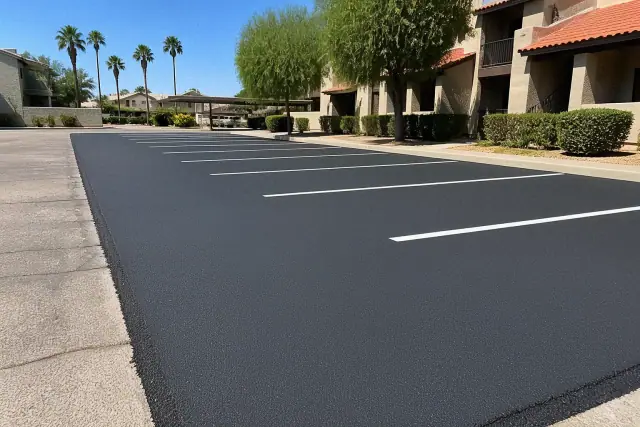
Freshly paved asphalt with white parking stripes in a commercial lot in Scottsdale, AZ.

We install new hot mix asphalt over properly prepared existing pavement to restore the driving surface without full excavation. Residential applications commonly require a minimum 1.5 inches compacted depth, while commercial and higher-traffic areas are typically specified at 2 to 3 inches compacted based on use.

Request Estimate

Mill and Overlay

Newly resurfaced asphalt parking lot with fresh white parking lines in Scottsdale, AZ.

Mill and overlay is used when the existing surface needs partial removal before new asphalt is placed. Milling helps correct uneven pavement, improve transitions at garage doors or curbs, remove high spots, and create room for the new layer without raising finished elevations too much.

Request Estimate

Asphalt Crack Repair

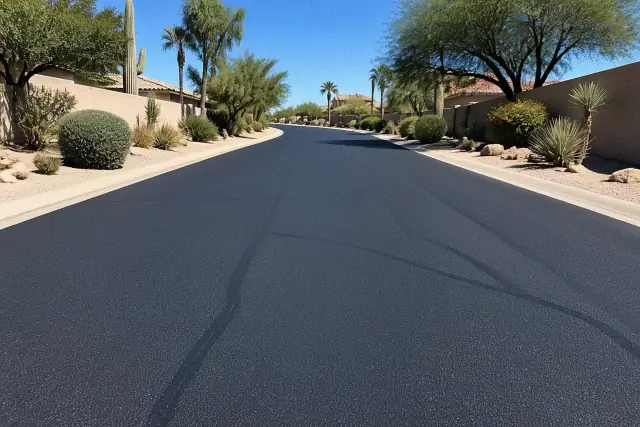
Newly paved asphalt road with crack repairs in a residential neighborhood in Scottsdale, AZ.

Crack repair prepares the old surface before overlay by routing and sealing openings that could let water reach the base. Longitudinal cracks, transverse cracks, and block cracking are evaluated so the overlay does not simply cover pathways for moisture and future movement.

Request Estimate

Pothole and Base Repair

Freshly paved smooth asphalt residential driveway in Scottsdale, AZ.

Potholes, depressions, and soft spots are repaired before resurfacing because a new overlay cannot stabilize failed base material by itself. We cut failed areas to clean edges, remove compromised material, proof-roll the subgrade, install compacted aggregate base, and place structural asphalt patches to match the surrounding elevation.

Request Estimate

Sealcoating and Pavement Preservation

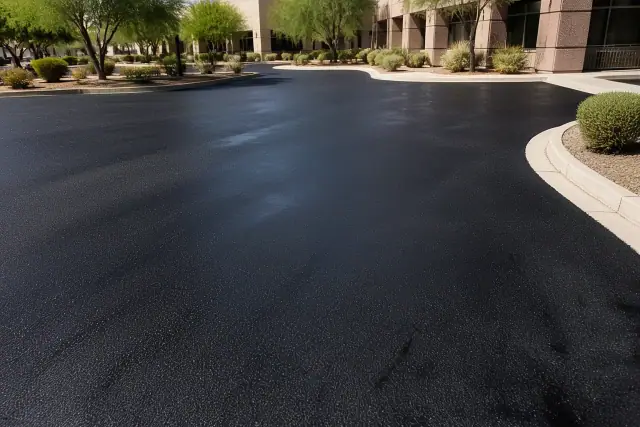
Freshly paved asphalt driveway in an office park with concrete curbing in Scottsdale, AZ.

Sealcoating protects the new asphalt surface after it has cured by helping slow UV oxidation and moisture intrusion. For residential overlays in Scottsdale, the source maintenance schedule calls for sealcoating every 3 to 5 years after the initial 90-day curing period.

Request Estimate

Line Striping and Final Details

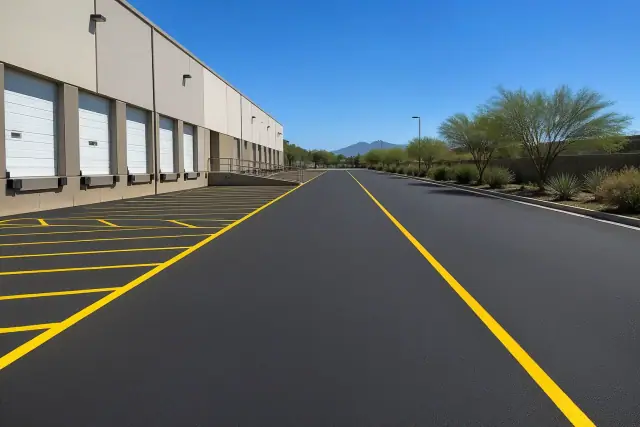
Freshly paved asphalt loading zone with yellow parking lines at a warehouse in Scottsdale, AZ.

Commercial resurfacing is completed with striping and final pavement details after the new asphalt has cured enough for layout work. We re-establish parking stalls, traffic lanes, fire lanes, handicap spaces, directional arrows, and other markings needed for a usable finished lot.

Request Estimate
Overlay Options

Types of Asphalt Overlay Options

Different pavement conditions call for different resurfacing scopes. We match the overlay system to the existing base, surface damage, traffic load, drainage pattern, and site constraints so the new asphalt layer solves the right problem instead of hiding a deeper one.

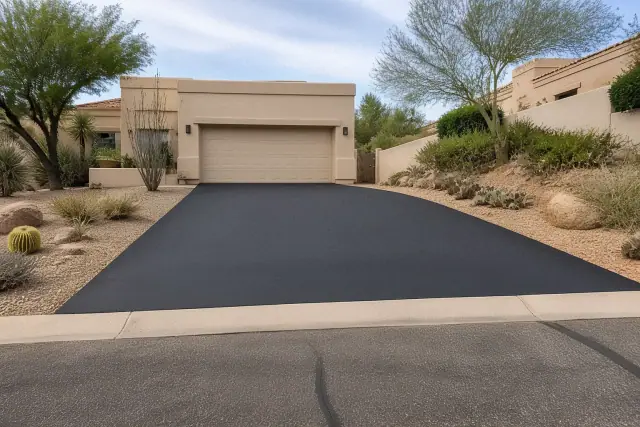
Freshly paved black asphalt driveway at a residential home in Scottsdale, AZ.

Residential Driveway Overlay

A residential driveway overlay is designed for existing asphalt driveways that have surface wear but remain structurally stable. Scottsdale residential paving needs have grown with the city, from 2,000 residents at incorporation in 1951 to over 241,000 residents across communities such as Gainey Ranch, DC Ranch, Grayhawk, McCormick Ranch, and south Scottsdale. The scope often focuses on crack sealing, garage-slab drainage, clean edge transitions, and a compacted mat thick enough for passenger vehicles.

  • Minimum 1.5 inches compacted asphalt depth for light residential traffic.
  • Useful for gray, oxidized, rough, or lightly cracked driveway surfaces.
  • Grade review helps keep water from draining toward the garage slab.
  • Appropriate for homes in areas such as McCormick Ranch, Gainey Ranch, DC Ranch, Grayhawk, and south Scottsdale.
  • Maintenance can help the overlay last 12 to 20 years in Scottsdale heat.
Request Estimate
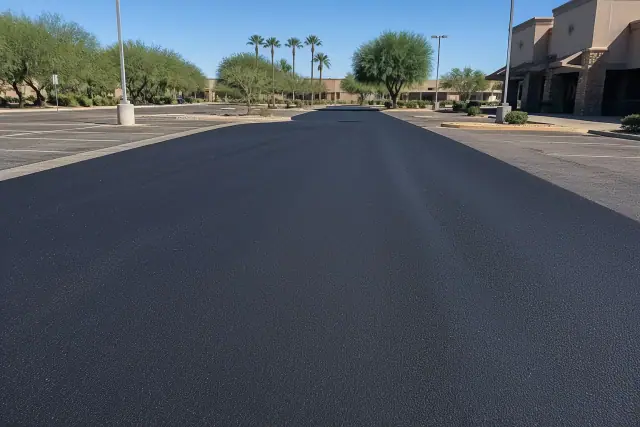
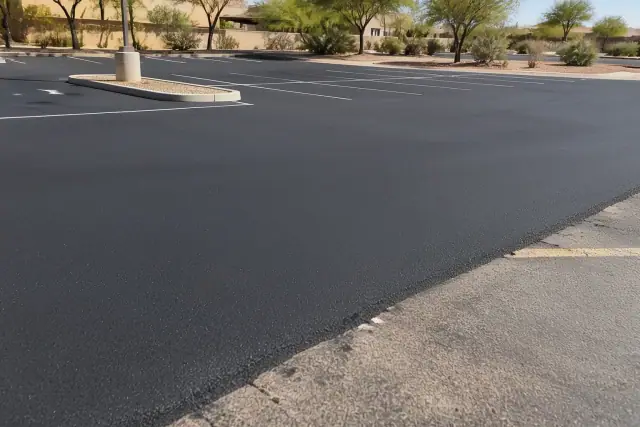
Newly resurfaced asphalt parking lot at a retail center in Scottsdale, AZ.

Commercial Parking Lot Overlay

Commercial parking lot overlay work must balance pavement durability with access for tenants, customers, and employees. We plan sections, signage, striping, and traffic flow so apartment complexes, shopping centers, and office buildings can return to use with clear pavement markings.

  • Commonly specified at 2 inches compacted depth for standard vehicle traffic.
  • Truck lanes, delivery areas, and dumpster pads may need 2.5 to 3 inches compacted depth.
  • Heavier mixes may use 3/4-inch or 1/2-inch nominal maximum aggregate gradation.
  • Large lots exceeding 10,000 square feet often gain equipment and labor efficiency at scale.
  • Final striping can restore stalls, fire lanes, handicap spaces, arrows, and travel lanes.
Request Estimate
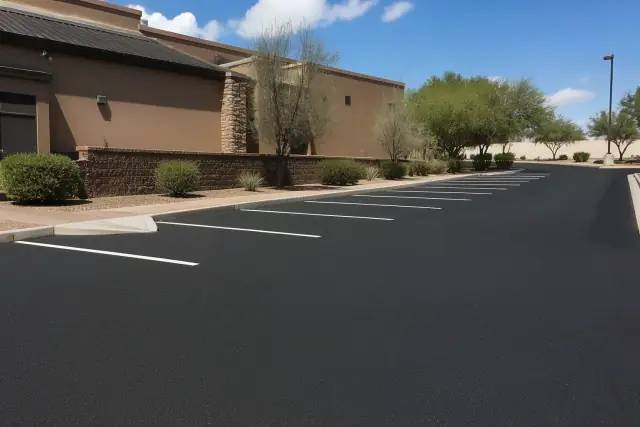
Newly resurfaced asphalt parking lot with fresh white parking lines at a restaurant in Scottsdale, AZ.

Mill and Overlay

Mill and overlay is a resurfacing option for surfaces that are too uneven for a simple overlay or need elevation control. Removing part of the existing surface creates space for new asphalt, improves tie-ins, and can help correct grade problems before paving.

  • Removes high spots that would otherwise telegraph through the new surface.
  • Helps prevent raised edges at garage doors, curbs, ramps, and utility covers.
  • Can support grade correction where low areas hold water after storms.
  • Creates a cleaner surface for tack coat and new hot mix bonding.
  • May be paired with patching where isolated base failure is discovered.
Request Estimate
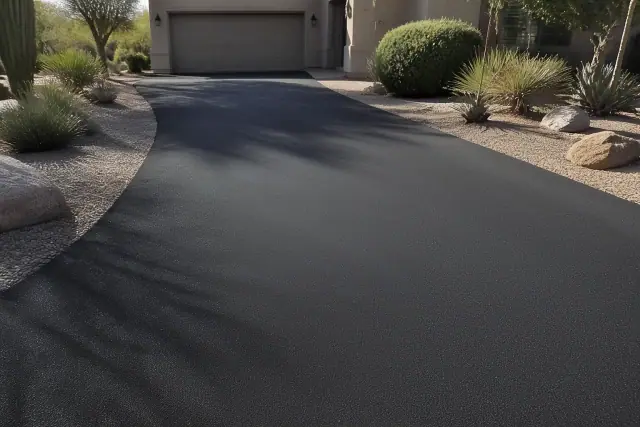
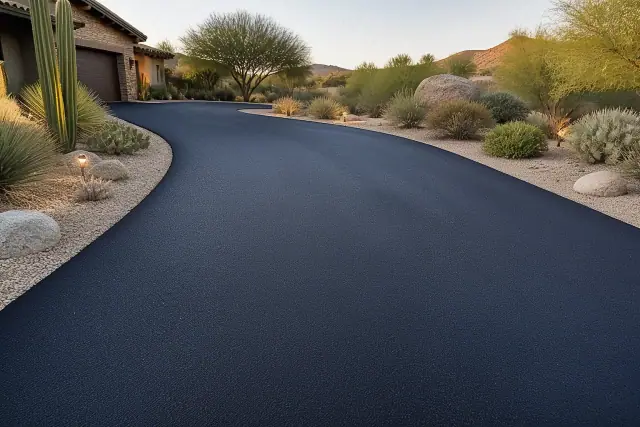
Newly resurfaced dark asphalt driveway on a desert property in Scottsdale, AZ.

Base Repair Plus Overlay

Base repair plus overlay is used when isolated failures need structural correction before resurfacing. It is the right approach for potholes, soft spots, and depressions that would reflect through the new mat if they were paved over without repair.

  • Failed areas are cut to clean edges before damaged material is removed.
  • The subgrade is proof-rolled to identify unstable or moving areas.
  • Compacted aggregate base is installed to the correct depth before patching.
  • A structural asphalt patch is compacted to match the surrounding surface elevation.
  • Skipping base repair can cause failure to reflect through the overlay within one to two seasons.
Request Estimate
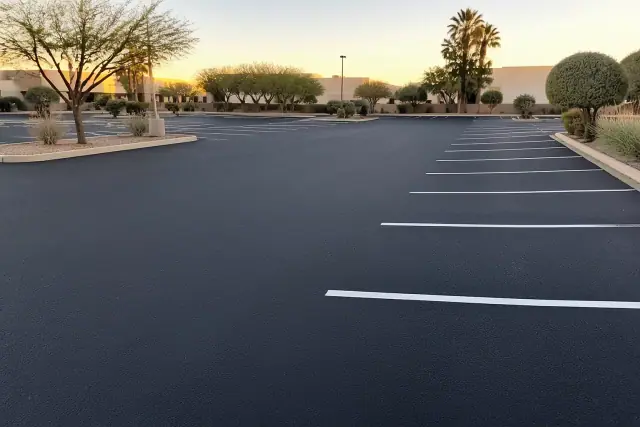
Freshly paved asphalt parking lot with crisp white lines and desert landscaping in Scottsdale, AZ.

Pavement Preservation Program

A pavement preservation program combines resurfacing with maintenance that slows the next cycle of cracking, oxidation, and water intrusion. This option is especially useful for property managers who need predictable maintenance intervals instead of recurring emergency repairs.

  • Crack routing and sealing reduce water entry before resurfacing or sealcoating.
  • Pothole repair protects the aggregate base from continued traffic damage.
  • Sealcoating after the curing interval helps shield new asphalt from UV exposure.
  • Line striping and signage restore orderly traffic flow after commercial paving.
  • City of Scottsdale Transportation Department and Engineering Department pavement preservation standards can guide long-term private-lot planning.
Request Estimate
Finding Your Right Fit

Choosing the Right Asphalt Overlay Approach

The best overlay scope depends on whether your pavement has surface aging, drainage issues, isolated base failures, or full-depth structural distress. We evaluate cracking patterns, soft spots, grade, existing thickness, traffic load, and access constraints so you can compare overlay, mill and overlay, repair plus overlay, or full replacement honestly.

Scottsdale Climate Expertise

Scottsdale asphalt fails differently because heat, UV radiation, and thermal cycling work on the binder every day. Our crews account for hot-mix temperature, haul distance, surface temperature, and compaction timing, including the need to place and compact asphalt before it cools below approximately 185°F.

Honest Pavement Assessment

Overlay is valuable only when the existing base can support it, so we do not recommend covering structural failure. Your estimate explains what is surface-level, what needs patching, and when full depth replacement is the better long-term choice despite its higher disruption and cost.

Preparation Before Paving

The work before paving determines how long the overlay performs. We clean the surface, seal cracks, repair failed sections, correct grades where needed, apply tack coat for bonding, and compact the new mat to the thickness required for the driveway or parking lot traffic it will carry.

What Sets Us Apart

Why Choose Us for Asphalt Resurfacing Overlay?

Scottsdale Asphalt brings together local pavement knowledge, clear estimating, proper surface preparation, and commercial-grade installation practices. Whether your project needs a straightforward residential overlay, a phased commercial parking lot resurfacing plan, or repair work before paving, we focus on the scope that protects the pavement instead of simply covering the symptoms.

Request Pavement Assessment

UV Oxidation and Fading

Sun exposure is one of the main reasons Scottsdale asphalt turns from black to gray. As UV breaks down the binder, the surface becomes brittle, aggregate shows through, and cracking starts to spread across the top layer.

Thermal Cracking and Block Cracks

Day-to-night temperature swings of 40°F or more can stress pavement as it expands and contracts. Longitudinal, transverse, and block cracking are warning signs that the binder is losing flexibility and water may soon reach the base.

Potholes and Depressions

Potholes and depressions usually mean water has entered through cracks and weakened the aggregate base or subgrade below. These areas must be cut out and rebuilt before overlay so the new mat does not collapse under the same traffic loads.

Alligator Cracking and Base Failure

Large interconnected crack patterns that look like broken glass often signal base failure rather than simple surface aging. When cracking covers more than 30 to 40 percent of a surface, or when the failure runs through the full pavement depth, overlay alone will not solve the problem and full replacement may be the more reliable option.

Poor Drainage and Pooling

Standing water after storms accelerates cracking and base damage, especially during Scottsdale monsoon season. We evaluate grade before paving and correct high or low areas when possible so water moves toward drainage structures instead of sitting on the new surface.

Heavy-Traffic Parking Lot Wear

Commercial parking lots wear faster because of turning movements, delivery vehicles, and concentrated traffic near entrances, drive aisles, and dumpster pads. Thin or under-specified asphalt can rut in summer conditions, especially when surface temperatures exceed 150°F.

How It Works

Our Asphalt Overlay Process

A durable overlay starts well before the paver arrives. Our process verifies the existing condition, fixes problems that would shorten the overlay life, establishes drainage, bonds the layers, compacts the new asphalt, and gives you clear return-to-service guidance.

01.

Site Walkthrough and Measurement

We inspect the existing pavement, identify cracks, potholes, soft areas, drainage issues, traffic loads, access points, and areas that may require milling or base repair. Accurate measurement also helps separate preparation costs from paving costs in the estimate.

02.

Crack Sealing and Surface Cleaning

Before overlay, existing cracks are routed and sealed where appropriate, loose material is removed, and oil contamination or debris is cleaned from the surface. This preparation gives the tack coat and new asphalt a better chance to bond uniformly.

03.

Drainage and Grade Correction

We review the grade to confirm water drains away from structures and does not pool on the new pavement. Where correction is needed, we mill high spots or build low areas to establish proper cross slope, typically a minimum of 1.5 to 2 percent on paved surfaces.

04.

Base Repair and Patching

Soft spots, depressions, and full-depth failures are repaired before the overlay is placed. The failed section is cut out, compromised material is removed, the subgrade is checked, compacted aggregate base is installed, and a structural asphalt patch is placed flush with the surrounding surface.

05.

Tack Coat and New Asphalt Placement

After the surface is prepared, tack coat is applied as a bonding layer between the old pavement and the new overlay mat. Hot mix asphalt is then placed with a paver at the specified compacted depth for the driveway, parking lot, or truck-service area.

06.

Compaction, Curing, and Finish Work

Rolling begins immediately behind the paver so the mat reaches target density before it cools. In Scottsdale conditions, foot traffic is typically safe within a few hours and vehicular traffic is generally permitted after 24 hours, followed by striping or later sealcoating when the surface is ready.

Get Better Pavement

Schedule an Asphalt Overlay
Consultation in
Scottsdale

Tell us what you are seeing on your driveway, parking lot, or private pavement surface, and we will help determine whether overlay, mill and overlay, targeted repair, or full replacement fits the condition. Scottsdale Asphalt provides clear resurfacing estimates for Scottsdale AZ and nearby Phoenix metro communities.

Overlay Help

Asphalt Resurfacing Overlay FAQs

These answers cover common questions about asphalt overlay cost, thickness, preparation, drainage, traffic timing, and Scottsdale-specific project considerations.

Call Our Experts

Asphalt overlay costs in Scottsdale typically range from $2 to $7 per square foot, depending on project size, prep work, material pricing, overlay thickness, and access for paving equipment. Small residential projects under 1,000 square feet may trend toward $6 to $7 per square foot, while large commercial lots over 10,000 square feet may approach $2 to $3 per square foot because equipment and labor are used more efficiently. For context, asphalt patch and pothole repair runs $2 to $5 per square foot, full driveway resurfacing sits in the $3 to $10 per square foot range, and full depth replacement is typically $8 to $15 per square foot.

The terms are often used together, but overlay is more specific. An asphalt overlay places a new layer over the existing pavement after preparation, while resurfacing can also include milling off part of the old surface before new asphalt is installed.

A light residential driveway overlay is commonly specified at a minimum compacted thickness of 1.5 inches. Standard commercial parking lots typically need at least 2 inches compacted, while truck routes, delivery areas, or dumpster pads may need 2.5 to 3 inches compacted depth.

NAOS stands for Natural Area Open Space and is part of Scottsdale zoning and development rules for properties with protected desert areas. Resurfacing an existing paved footprint is different from expanding pavement; projects that expand impervious surface, disturb NAOS, or alter drainage may need review by the City of Scottsdale Engineering Department or Planning Division.

Overlay is usually appropriate when the base is structurally sound and damage is limited to oxidation, minor cracking, surface raveling, or shallow depressions. Full depth replacement becomes the better choice when alligator cracking, heaving, subsidence, or widespread base failure shows the pavement structure is compromised below the surface. In Scottsdale climate, overlay is described as a 12-20 year maintenance-supported option, while full replacement is listed at 20-30 years; recurring repairs on a failed base can cost more over five years than replacing the pavement correctly.

In Scottsdale warm weather, foot traffic is typically safe within a few hours and vehicular traffic is generally allowed after 24 hours. During the hottest months, avoid heavy vehicles and sharp turning movements for an additional 48 to 72 hours because the new surface can remain pliable longer.

Resurfacing an existing paved area in place generally does not require a building permit when the footprint and drainage pattern are unchanged. Permit or city review may become relevant if the project expands pavement, changes drainage, affects stormwater requirements, or involves a NAOS-designated area.

A properly installed residential asphalt driveway overlay in Scottsdale can last 12 to 20 years with appropriate maintenance. Prep quality, compacted thickness, drainage, and sealcoating every 3 to 5 years after the initial 90-day curing period all affect the final service life.

Preparation can include site inspection, measuring, crack routing and sealing, cleaning loose material, removing oil contamination, patching soft spots, correcting grade, and applying tack coat. Skipping these steps can prevent the overlay from bonding correctly or allow old failures to reflect through the new asphalt.

Potholes and soft spots must be repaired before overlay. The failed section is cut out, the unstable material is removed, the subgrade is checked, compacted aggregate base is installed, and a structural asphalt patch is placed before the final resurfacing layer.

Heat affects both pavement aging and installation timing. Hot mix asphalt must be placed and compacted before it cools below approximately 185°F, while summer surface temperatures that exceed 150°F can keep the new mat more pliable and vulnerable to tire marking if traffic returns too aggressively.

Yes, a resurfaced commercial lot should be striped after the new asphalt has cured enough for layout work. Striping restores parking stalls, traffic lanes, fire lanes, handicap spaces, directional arrows, and other markings that help customers, employees, and tenants use the lot safely.

Drainage is critical because standing water works through cracks, weakens the aggregate base, and shortens pavement life. Before paving, grade should move water away from structures and toward drainage points, often using a minimum 1.5 to 2 percent cross slope where conditions allow.