Proudly serving Scottsdale, Mesa, Tempe, Phoenix, Chandler, Gilbert & surrounding areasCall or Text 24/7: 602-905-5399
Aerial view of a paved asphalt parking lot at an office complex in Scottsdale, AZ with desert mountains in the distance.

Asphalt Sealcoating and Pavement Protection in Scottsdale, AZ

Scottsdale Asphalt provides professional asphalt sealcoating in Scottsdale AZ for residential driveways, commercial parking lots, HOA pavement, and industrial surfaces. Our asphalt maintenance services include sealcoating, crack sealing, pothole repair, asphalt patching, chip seal, and line striping. We serve Scottsdale and the broader Phoenix metro with protective coatings designed to slow oxidation, cracking, water infiltration, and traffic wear.

Scottsdale pavement faces summer temperatures that regularly exceed 110°F, year-round UV exposure, and late-summer monsoon moisture. Left unprotected, asphalt binder dries out, turns gray, and becomes brittle enough to crack or ravel far sooner than it would in cooler climates. We prepare each surface before sealing, then apply asphalt emulsion or water-based sealcoat by spray or squeegee at the appropriate spread rate. As a licensed and bonded local sealcoating contractor, we provide clear timelines, transparent pricing, and honest recommendations about sealing, patching, or replacement.

Every estimate starts with a real pavement assessment, including oxidation level, crack pattern, drainage flow, oil staining, and any failed areas that need patching first. If your surface can be protected with sealcoat and crack sealing, we explain the scope clearly. If a section is too deteriorated for sealer, we identify the repair options before work begins.

Scottsdale Asphalt provides asphalt sealcoating throughout Scottsdale, Paradise Valley, Tempe, Mesa, Chandler, Gilbert, Phoenix, and nearby desert-climate pavement service areas.

★ ★ ★ ★ ★5/5 Customer Rating · 26 Years in the Asphalt Trade · Thousands of Paving Jobs Completed · Licensed, Bonded & Insured · Homes, Businesses & Commercial Sites

Asphalt Sealcoating & Maintenance Benefits

What Is Asphalt Sealcoating?

Asphalt sealcoating is the application of a protective liquid coating over an existing paved surface. The coating, typically an asphalt emulsion or water-based sealer, fills minor surface voids and bonds to the asphalt binder below. Once cured, it creates a uniform barrier that slows surface breakdown without adding structural thickness.

That barrier matters in Scottsdale because the pavement is exposed to intense UV, extreme heat, and monsoon moisture in the same maintenance cycle. Scottsdale sits at roughly 1,220 feet in eastern Maricopa County, and local asphalt expands, contracts, dries, and absorbs radiant heat from surrounding hardscape. Sealcoating helps protect the binder before surface oxidation becomes cracking, raveling, and pothole formation.

Professional sealcoating is most effective when the surface is cleaned, cracks are treated, oil spots are primed, and loose or failed pavement is patched first. Our crews use mechanical blowers, rotary brushes, spray application, and squeegee application depending on the pavement texture and project size. The goal is a protective coating that bonds correctly, cures evenly, and gives the asphalt a longer service life.

Benefits of Professional Sealcoating

Sealcoating is preventive maintenance, not a cosmetic shortcut. When it is applied to pavement that is still structurally sound, it slows the damage cycle that turns faded asphalt into cracks, soft base areas, and expensive cut-out repairs. For Scottsdale driveways and parking lots, the biggest benefits come from UV protection, moisture control, and disciplined surface preparation.

  • Slows oxidation from Scottsdale heat and UV exposure, including summer days that regularly exceed 110°F.
  • Helps preserve binder flexibility so pavement that might fail in 10 to 12 years can last 20 years or more with regular maintenance.
  • Creates a moisture barrier that sheds monsoon rain away from surface voids and existing sealed cracks.
  • Fills minor surface voids so water, air, and sunlight have fewer openings into the asphalt binder.
  • Restores a darker, uniform finish that improves curb appeal and makes fresh line striping easier to see.
  • Costs far less than alligatored asphalt repair, which can run $10 to $15 per square foot when cut-out replacement is required.
  • Supports residential driveways, commercial lots, HOA parking areas, office parks, and industrial pavement.
  • Pairs with crack sealing, patching, and honest replacement guidance when sealer alone is not the right fix.
Asphalt Maintenance Services

Asphalt Sealcoating Services

Scottsdale Asphalt handles the maintenance work that keeps pavement protected before it reaches the replacement stage. Our service mix covers residential and commercial sealcoating, crack sealing, pothole repair, asphalt patching, chip seal, and line striping. Each recommendation is based on surface condition, traffic use, drainage, and the age of the existing asphalt.

Driveway Sealcoating

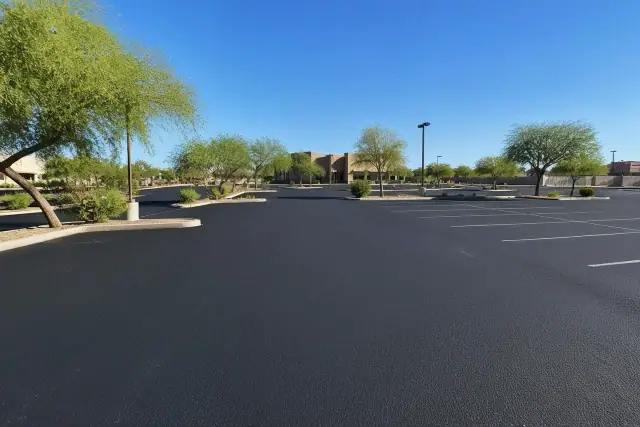
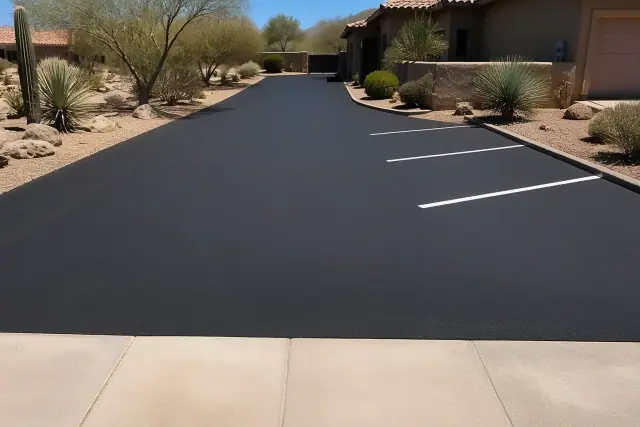
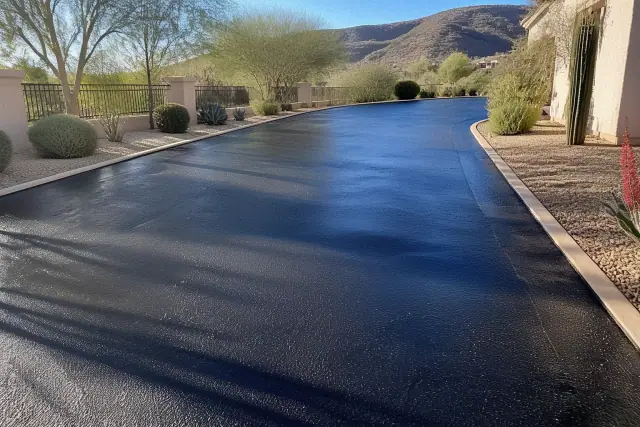
Freshly applied black asphalt sealcoating on a parking lot drive aisle in Scottsdale, AZ.

Residential driveways in Scottsdale sit under direct sun for much of the year and absorb heat from walls, garages, and surrounding hardscape. Driveway sealcoating restores a protective black finish, slows surface oxidation, and helps keep small cracks from becoming water-entry points during monsoon storms. Most local residential driveways benefit from resealing every 2 to 3 years once the original asphalt has cured.

Request Estimate

Parking Lot Sealcoating

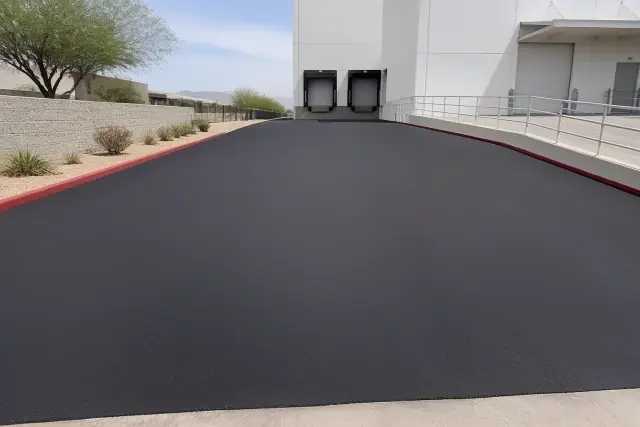
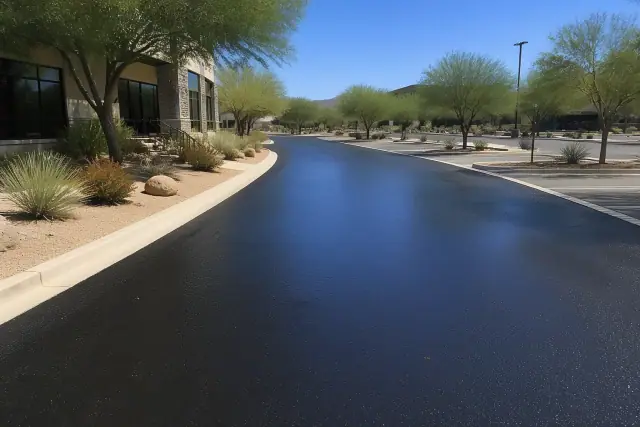
Freshly sealcoated asphalt drive at a warehouse loading bay in Scottsdale, AZ.

Commercial parking lots need more than a fresh-looking surface. Delivery vehicles, turning movements, braking loads, tire scuffing, and fuel or oil drips can wear down unprotected asphalt quickly. We plan parking lot sealcoating around tenant access, customer traffic, business hours, and after-hours windows when needed for strip malls, office parks, HOA parking areas, industrial facilities, North Scottsdale properties, Old Town sites, and the Scottsdale Airpark corridor.

Request Estimate

Crack Sealing

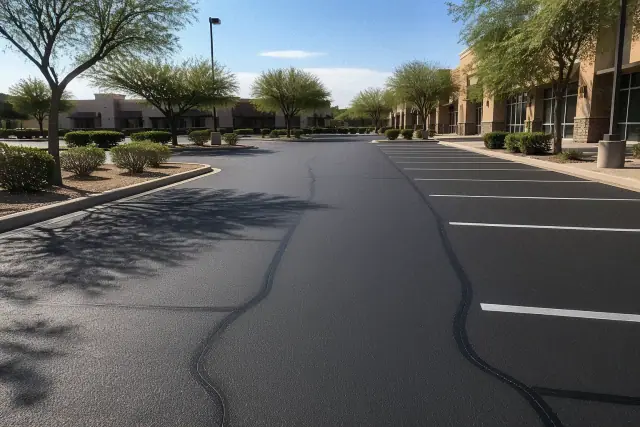
Freshly sealcoated parking lot with smooth black asphalt and filled cracks in Scottsdale, AZ.

Crack sealing closes openings before water reaches the compacted aggregate base. Cracks wider than about 1/4 inch are typically filled with hot-pour rubberized crack sealant before the sealcoat is applied, and working cracks up to 1 inch wide can often be stabilized when the surrounding pavement is still sound. This is especially important before the July monsoon rains arrive.

Request Estimate

Pothole Repair and Asphalt Patching

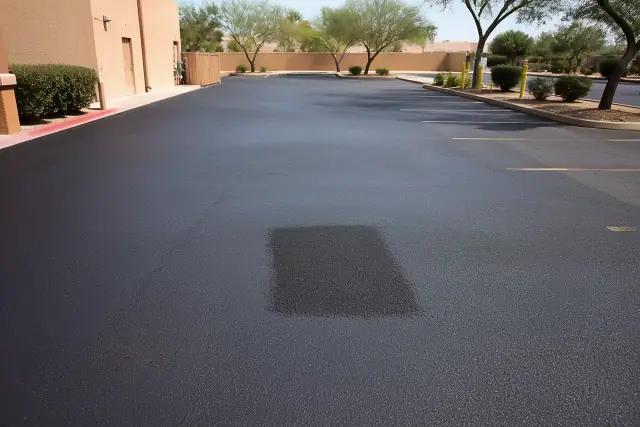
Newly sealcoated restaurant parking lot with a patched pothole in Scottsdale, AZ.

Sealcoat cannot rebuild a pothole, soft base, or failed pavement section. When inspection shows loose asphalt, alligator cracking, depressions, or edge failure, we identify the area for asphalt patching or cut-out repair before coating the surrounding pavement. Patching first gives the sealcoat a stable surface to bond to and prevents a surface treatment from hiding structural damage.

Request Estimate

Chip Seal Applications

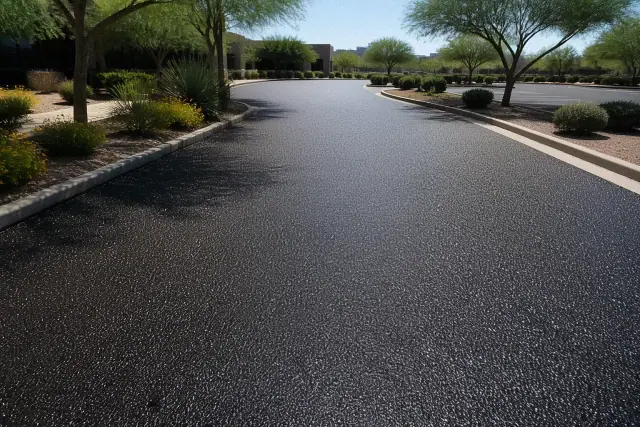
Freshly applied black asphalt sealcoating on a commercial parking lot in Scottsdale, AZ.

Chip seal is a different maintenance treatment than standard sealcoating. It uses liquid asphalt binder followed by aggregate chips that are rolled into the surface, creating a new textured wearing course for structurally sound pavement. In Scottsdale, chip seal can be a cost-effective option for larger surfaces, rural-style drives, private roads, and some commercial areas where added texture and wear resistance make sense.

Request Estimate

Line Striping After Sealcoat

Newly sealcoated asphalt driveway with fresh white parking lines at a home in Scottsdale, AZ.

Fresh sealcoating gives parking lots a clean dark background, and line striping restores the organized layout customers and tenants rely on. We can coordinate crack sealing, sealcoat application, and restriping as one scope so stalls, drive lanes, curbs, and traffic markings are refreshed after the surface cures. The result is a cleaner, safer-looking parking area without juggling separate contractors.

Request Estimate
Sealcoat Options

Types of Asphalt Maintenance Treatments

The right pavement treatment depends on the surface condition, traffic load, and whether the asphalt needs protection, crack stabilization, patching, or a new wearing course. Sealcoating is ideal for structurally sound pavement with oxidation and minor surface wear. Crack seal, patching, spray application, squeegee application, and chip seal each solve a different part of the maintenance problem.

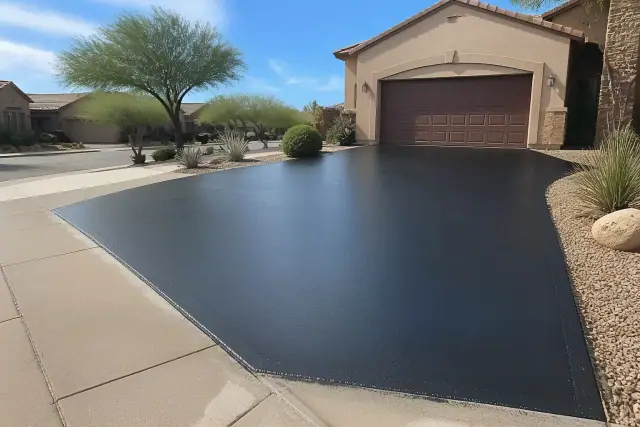
Freshly sealed dark asphalt driveway with a smooth finish in a residential neighborhood of Scottsdale, AZ.

Asphalt Emulsion Sealcoat

Asphalt emulsion sealcoat is a common protective coating for driveways and parking lots that are faded but still structurally intact. It bonds to the existing surface, fills fine voids, and helps shield the binder from UV exposure, water, and traffic wear.

  • Best for pavement that is oxidized, gray, and porous but not structurally failed.
  • Creates a uniform dark finish that improves appearance and striping contrast.
  • Works well as part of a recurring 2- to 3-year driveway maintenance cycle.
  • Should be applied only after dirt, vegetation, oil, and loose debris are removed.
  • Does not add structural thickness, so potholes and failed areas must be patched first.
Request Estimate
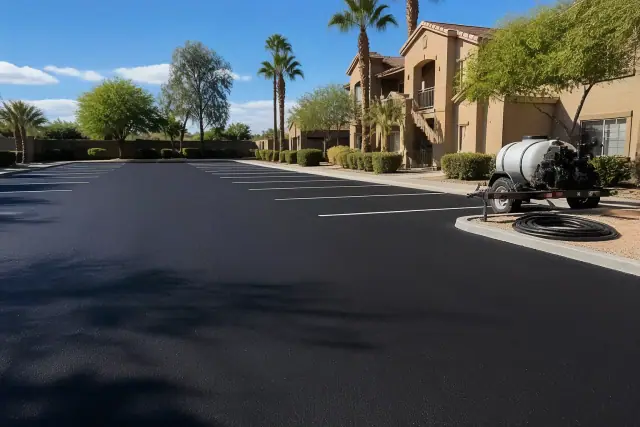
Freshly applied black asphalt sealcoating with bright white parking lines in a Scottsdale, AZ apartment parking lot.

Water-Based Sealcoat Systems

Water-based sealcoat systems provide a protective surface film when applied at the correct spread rate and under the right weather conditions. They are used to restore surface protection on prepared asphalt while allowing the coating to cure into a durable barrier.

  • Suitable for prepared residential and commercial pavement with minor surface voids.
  • Requires clean pavement and proper oil-spot treatment for reliable adhesion.
  • Typically applied in two coats when product specifications call for it.
  • Needs ambient temperatures above 50°F and conditions that support steady curing.
  • Performs best when scheduled outside Scottsdale's most extreme summer heat.
Request Estimate
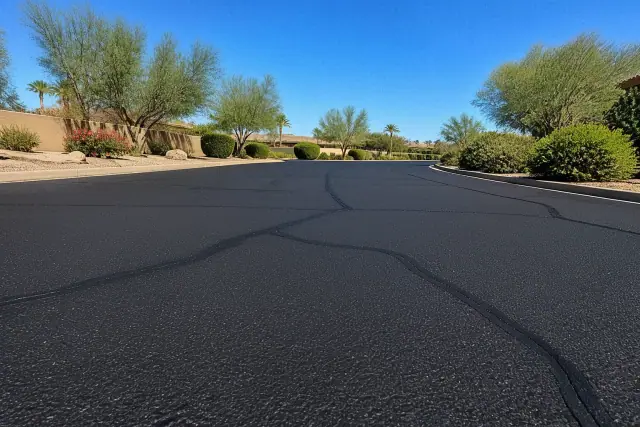
Freshly sealcoated asphalt road with crack sealant in a residential neighborhood in Scottsdale, AZ.

Hot-Pour Rubberized Crack Sealant

Hot-pour rubberized crack sealant is used before sealcoating to close working cracks and help keep water out of the base. The material remains flexible as the pavement expands and contracts, which matters in Scottsdale where daily surface temperatures can swing sharply between night and midday.

  • Recommended for cracks wider than approximately 1/4 inch.
  • Can stabilize working cracks up to 1 inch wide when the surrounding asphalt is sound.
  • Applied hot so the material bonds to both crack faces and seals the opening.
  • Uses ASTM D6690 Type II and Type III joint and crack sealant specifications where appropriate.
  • Helps protect the base before monsoon moisture turns small cracks into potholes.
Request Estimate
Freshly sealcoated black asphalt driveway at a desert property in Scottsdale, AZ.

Spray and Squeegee Application

Spray and squeegee application both have a place in professional sealcoating. The method depends on surface texture, size, product specification, and how much material needs to be worked into surface voids.

  • Squeegee application helps force sealer into rougher driveway surfaces and small voids.
  • Spray application provides fast, uniform coverage on larger parking lots and broad flat areas.
  • Correct spread rate is more important than simply making the surface look black.
  • Thin coats wear through early, while overly heavy coats can track or cure poorly.
  • Adequate drying time between coats helps the finished surface cure more evenly.
Request Estimate
Freshly applied chip seal surface on an office drive aisle in Scottsdale, AZ, surrounded by desert landscaping.

Chip Seal Wearing Course

Chip seal adds a textured aggregate wearing course instead of a thin liquid coating alone. It can be useful where the existing pavement is structurally sound but the surface layer has worn away and needs more traction and wear resistance.

  • Uses liquid asphalt binder followed by aggregate chips rolled into the surface.
  • Adds texture and some surface benefit, unlike sealcoating, which is primarily protective.
  • Often considered for large areas, rural roads, private drives, and selected commercial pavement.
  • Creates a rougher texture than standard sealcoat, which should be considered for site use.
  • Works only when the existing base and pavement structure are still stable.
Request Estimate
Finding Your Right Fit

Choosing the Right Asphalt Sealcoating Plan

A good sealcoating plan starts by separating surface wear from structural failure. We look at color, oxidation, cracking, drainage, traffic, oil exposure, and whether a driveway or parking lot can accept sealer without hiding deeper problems. That assessment determines whether the right next step is sealcoat, crack sealing, patching, chip seal, or a larger resurfacing conversation.

Surface Condition Comes First

We inspect for surface oxidation, alligator cracking, soft spots, edge failure, crack width, drainage flow, and oil contamination before recommending a coating. If the pavement is a good sealcoating candidate, we build the prep around the actual condition. If it is not, we explain why repair or replacement is the more honest recommendation.

Timed for Scottsdale Weather

Scottsdale's best sealcoating windows are usually spring and early fall, when the surface is warm enough to cure but not so hot that the sealer flashes off too fast. During July and August, pavement surface temperatures can reach 160°F or above in direct sun. We schedule around heat, humidity, and monsoon moisture so the coating has the best chance to bond and cure properly.

Clean, Scheduled Application

Clean edges, organized work zones, and realistic reopening times matter on both homes and commercial sites. We remove debris, protect curbs and nearby landscaping from overspray, communicate traffic restrictions, and coordinate after-hours work when a business cannot shut down during normal customer traffic.

What Sets Us Apart

Why Choose Us for Asphalt Sealcoating?

Scottsdale Asphalt combines local pavement knowledge with practical maintenance recommendations. We understand how high UV exposure, Arizona heat, soil movement under monsoon moisture, and heavy commercial traffic affect asphalt in Scottsdale, Paradise Valley, Tempe, Mesa, Chandler, and the greater Phoenix metro. In a city that grew from about 2,000 residents at incorporation in 1951 to more than 241,000 residents by the 2020 census, maintained pavement is part of keeping homes, storefronts, offices, and parking areas looking cared for. Our role is to protect asphalt when maintenance is enough and to be direct when repair is the better investment.

Get a Free Assessment

UV Oxidation and Fading

Gray, chalky asphalt is often the first visible sign that UV exposure has stripped oils from the binder. In Arizona, pavement can show surface checking within 3 to 5 years of installation when it is left unprotected. Sealcoating slows that top-down oxidation cycle before brittleness turns into cracking and raveling.

Monsoon Water Intrusion

Scottsdale's monsoon season typically runs from mid-June through September and can deliver short, intense rainfall, sometimes an inch of rain in under an hour. When water enters cracks or porous asphalt, it can soften the base layer and create depressions or potholes. Sealcoat and crack sealing help keep that water moving toward drainage paths instead of into the pavement structure.

Oil Spots and Poor Adhesion

Oil and petroleum stains act as bond-breakers between the asphalt surface and fresh sealer. If those spots are ignored, the coating can peel, bubble, or fail early even when the rest of the pavement looks good. We identify oil-contaminated areas during prep and treat them with primer before sealcoating.

Driveway Cracking and Raveling

Residential driveways often start with hairline checking, edge cracks, and surface raveling caused by heat and UV exposure. Once cracks widen, monsoon moisture can reach the base and accelerate damage. Early sealcoating and crack filling are much less disruptive than waiting for full-depth driveway repairs.

Commercial Traffic Wear

Parking lots face tire scuffing, braking, delivery traffic, drive-through movements, and fuel or oil drips that residential driveways do not. Unprotected asphalt in these high-use areas wears faster and loses its professional appearance. Commercial sealcoating helps protect the surface while giving restriping a clean, visible background.

Alligator Cracking and Base Failure

Alligator cracking is an interconnected map pattern that usually points to base failure, not a simple surface blemish. Sealcoating over it will not solve the structural problem, and failed sections need cut-out repair or repaving first. If more than 30 to 40 percent of a driveway or parking lot is structurally cracked, resurfacing or replacement may make more sense than repeated surface treatments.

How It Works

Our Asphalt Sealcoating Process

The finished sealcoat is only as good as the inspection, cleaning, and crack preparation completed before application. Our process is designed to protect the pavement, set clear expectations, and avoid coating over problems that need repair first. Here is how a typical Scottsdale sealcoating project moves from estimate to reopening.

01.

Surface Inspection and Estimate

We evaluate oxidation, cracking, drainage, base stability, soft spots, oil contamination, and areas that may require patching or replacement. This gives you an itemized estimate that separates cleaning, crack filling, sealer application, patching, and any line striping or special access needs.

02.

Cleaning and Surface Preparation

Before sealer touches the pavement, we remove dirt, vegetation, loose debris, and unstable material using mechanical blowers and rotary brushes. Oil-stained areas receive primer treatment, edges are cleared, and any failed sections are marked for asphalt patching.

03.

Crack Sealing and Patching

Cracks wider than approximately 1/4 inch are filled with hot-pour rubberized material so the opening can move with temperature changes instead of cracking back out. Potholes, alligatored areas, and soft spots are repaired before coating because sealcoat needs a stable surface to bond correctly.

04.

Sealcoat Application

We apply the selected asphalt emulsion or water-based sealcoat by squeegee or spray depending on the surface and scope. Most projects use the manufacturer-specified spread rate, often two coats with adequate drying time between coats, to reach the proper dry film thickness without tracking or poor curing.

05.

Curing and Access Control

Under normal Scottsdale spring or fall conditions, sealcoat is often dry to the touch in 1 to 2 hours and ready for foot traffic in 4 to 6 hours. Vehicle traffic should stay off the surface for a minimum of 24 hours, with longer restrictions when monsoon humidity slows curing.

06.

Reopening and Maintenance Guidance

We explain reopening timing before work starts so households, tenants, and customers can plan around the project. During the first 30 days, the sealer continues to reach full cure, so tight turning movements and long-term parking in the same position should be limited where possible.

Get Better Pavement Protection

Schedule an Asphalt
Sealcoating
Estimate

Protect faded, cracked, or weathered asphalt before small surface problems become expensive repairs. Scottsdale Asphalt provides free estimates for driveway sealcoating, parking lot seal coating, crack sealing, patching, chip seal, and line striping throughout Scottsdale and nearby Phoenix metro communities.

Sealcoating Help

Asphalt Sealcoating FAQs

Have questions about sealcoating timing, pricing, curing, or whether your pavement needs repair first? These answers cover the most common Scottsdale driveway and parking lot sealcoating decisions.

Call Our Experts

Residential driveway sealcoating in Scottsdale typically runs $0.25 to $0.45 per square foot for professional application. A standard driveway project often averages $350 to $870, while a 1,500 to 2,000 square foot driveway may fall in the $375 to $900 range depending on condition and crack sealing needs. Commercial parking lot sealcoating with crack sealing and line striping commonly runs $0.65 to $0.90 per square foot for the full scope.

Most Scottsdale residential driveways benefit from sealcoating every 2 to 3 years after the asphalt has cured. High-traffic commercial surfaces often benefit from reapplication about every 2 years. The national 3- to 5-year timing can be too long for Arizona heat and UV exposure, so gray color and surface dryness are useful warning signs.

The best sealcoating windows in Scottsdale are usually March through May and October through November. Sealcoat needs ambient temperatures above 50°F, but extreme July and August surface heat can cause the coating to flash off too quickly. Spring scheduling also gives the new coating time to cure before monsoon storms begin.

Sealcoating is a thin liquid protective coating applied over existing asphalt to slow UV, water, and traffic wear. Chip seal uses liquid asphalt binder followed by aggregate chips rolled into the surface, creating a textured wearing course. Chip seal can add surface texture and some durability on structurally sound large areas, while sealcoating is primarily a protective barrier and appearance refresh.

DIY driveway sealers can work for small touch-ups, but they are usually lower-solid-content products and depend heavily on surface preparation. Professional sealcoating includes mechanical cleaning, oil spot treatment, hot-pour crack sealing when needed, and application at the correct spread rate. Under-prepared surfaces can peel, bubble, or lose adhesion within one season.

In dry spring or fall conditions, sealcoat is often dry to the touch in 1 to 2 hours and ready for foot traffic in 4 to 6 hours. Vehicle traffic should stay off the surface for at least 24 hours. Full cure takes about 30 days, and monsoon humidity can extend drying time.

Sealcoating is appropriate when the pavement is structurally intact but showing oxidation, fading, and minor cracking. If there is extensive alligator cracking, deep structural cracking, or soft base failure, the failed areas need repair before any surface coating. When more than 30 to 40 percent of the pavement is structurally damaged, resurfacing or replacement may be more economical than repeated sealcoating.

Sealcoating helps prevent the conditions that lead to potholes, but it does not repair potholes that already exist. Potholes form when water enters cracked or porous asphalt, softens the base, and traffic causes the unsupported surface to collapse. Crack sealing, patching, and a waterproof sealcoat barrier interrupt that damage cycle early.

The pavement is inspected, cleaned, and prepared before any sealer is applied. Crews remove dirt, vegetation, oil contamination, and loose debris with mechanical blowers and rotary brushes, then prime oil spots and flag unstable areas for patching. This preparation determines how well the sealcoat bonds and how uniformly it cures.

Yes, cracks wider than about 1/4 inch should generally be filled before sealcoat is applied. Hot-pour rubberized crack filler bonds to both sides of the crack and remains flexible as pavement expands and contracts. Sealing cracks before monsoon season helps keep water out of the base layer.

Commercial sealcoating can often be scheduled outside normal business hours to reduce disruption when the property allows it. We plan access, curing timelines, traffic flow, and reopening schedules with property managers before work begins. The goal is to protect the pavement while keeping tenants, customers, and visitors informed about access restrictions.

Light tire marks can appear during the first weeks because the sealer continues curing after it is reopened to traffic. Tight turning movements, heavy vehicles, or parking in the same spot can leave marks before the surface reaches full cure at about 30 days. Avoiding sharp turns and long stationary parking during the first week helps reduce tracking and scuffing.

Scottsdale Asphalt provides asphalt sealcoating in Scottsdale AZ and serves the surrounding Phoenix metro area. Nearby service communities named in our service area include Paradise Valley, Tempe, Mesa, and Chandler. We handle residential driveways, commercial parking lots, HOA pavement, and industrial surfaces across the area.