Proudly serving Scottsdale, Mesa, Tempe, Phoenix, Chandler, Gilbert & surrounding areasCall or Text 24/7: 602-905-5399
Aerial view of a paved asphalt parking lot at an office complex in Scottsdale, AZ with desert mountains in the distance.

Asphalt Paving in Gilbert, AZ: Driveway and Parking Lot Paving

Scottsdale Asphalt provides asphalt paving in Gilbert, AZ for residential driveways, commercial parking lots, private roads, and pavement maintenance projects. Our service lineup includes Asphalt Paving, Driveway Installation Replacement, Parking Lot Paving, Asphalt Repair, Asphalt Resurfacing Overlay, Asphalt Sealcoating, Crack Sealing, Pothole Repair, Parking Lot Striping, and Asphalt Milling Removal. We serve homeowners, HOAs, property managers, general contractors, and businesses across Gilbert and the southeast Valley. Every quote starts with the existing pavement condition, drainage needs, access, and base requirements so the scope fits the property.

With Gilbert's population listed at 293,630 as of 2023 and commercial corridors expanding along Williams Field Road and Santan Village Parkway, pavement has to stand up to more residential and business traffic. Local surfaces also take a beating from surface temperatures that can exceed 150°F, intense UV exposure, monsoon runoff, and expansive clay soils. Those conditions make shortcuts in excavation, base compaction, drainage, and mix placement show up quickly as cracks, rutting, ponding, or potholes. We build each project around proper subgrade preparation, hot mix compaction, and drainage flow so the finished surface can handle Arizona heat and everyday traffic.

We work in established Gilbert communities such as Morrison Ranch, Finley Farms, Power Ranch, Val Vista Lakes, Seville, Higley Groves, and the Santan Village corridor. Contact Scottsdale Asphalt for a clear asphalt paving quote before work begins.

★ ★ ★ ★ ★5/5 Customer Rating - 26 Years in the Asphalt Trade - Thousands of Paving Jobs Completed - Licensed, Bonded & Insured - Homes, Businesses & Commercial Sites
Asphalt Services

Asphalt Services in Gilbert, AZ

Scottsdale Asphalt provides asphalt paving, driveway installation replacement, parking lot paving, asphalt repair, asphalt resurfacing overlay, asphalt sealcoating, crack sealing, pothole repair, parking lot striping, and asphalt milling removal throughout Gilbert. We also serve nearby southeast Valley communities, including Queen Creek , when properties need pavement work built around Arizona heat, drainage, and traffic demands.

Commercial Commercial Asphalt Paving

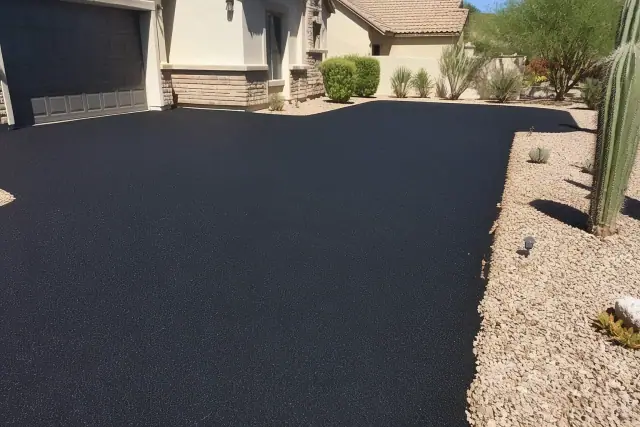
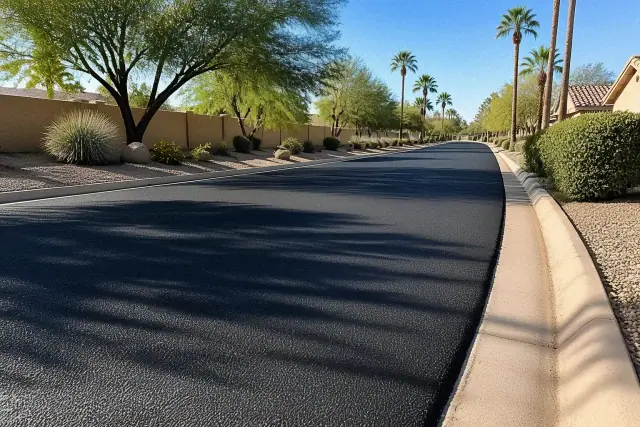
Freshly paved asphalt driveway at a residential home in Gilbert, AZ.

Asphalt paving in Gilbert covers new asphalt installation for residential driveways, commercial parking areas, private roads, access lanes, loading areas, and HOA pavement surfaces. Scottsdale Asphalt handles site preparation, grading, compacted aggregate base, and hot mix placement so the finished surface is built around drainage, traffic load, and Arizona heat rather than a thin cosmetic layer.

Explore Service

Driveway Installation & Replacement

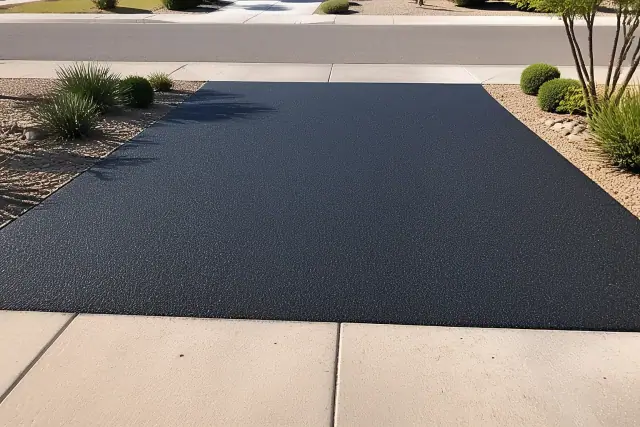
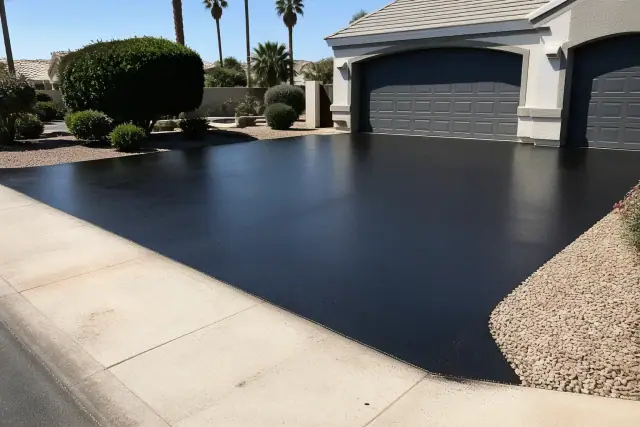
Freshly paved asphalt driveway at a residential home in Gilbert, AZ, under bright afternoon sunlight.

Driveway installation replacement in Gilbert starts with the right excavation depth, typically 4 to 6 inches of compacted aggregate base before a 2- to 3-inch hot mix asphalt surface course. We grade for drainage from the start because standing water is one of the primary causes of early driveway failure in Gilbert's clay-heavy soils.

Explore Service

Parking Lot Paving

Freshly paved asphalt driveway at a residential home in Gilbert, AZ, under bright afternoon sunlight.

Parking lot paving in Gilbert requires engineered grading, heavy-duty base compaction, pavement thickness matched to expected traffic, ADA-compliant slopes, storm drainage flow paths, and striping layout before asphalt goes down. We pave commercial lots for retail centers, medical offices, industrial facilities, access aisles, drive lanes, and customer parking areas.

Explore Service

Asphalt Repair

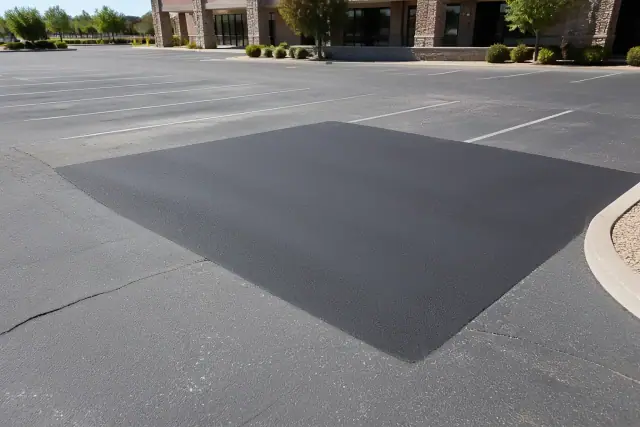
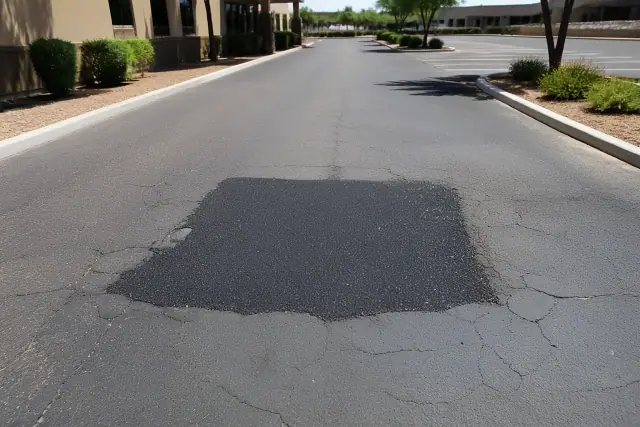
Freshly paved asphalt patch in a sunny retail center parking lot in Gilbert, AZ.

Asphalt repair in Gilbert addresses localized pavement failures such as potholes, cracked sections, broken edges, heaved areas, deteriorated utility cuts, and soft spots that do not always require full reconstruction. Scottsdale Asphalt saw-cuts clean edges, removes failed material, prepares the base, and places properly heated hot mix asphalt instead of simply covering damage with a short-term patch.

Asphalt Resurfacing & Overlay

Freshly sealed cracks in an apartment parking lot under bright sun in Gilbert, AZ.

Asphalt resurfacing overlay is used when existing pavement is still structurally sound but the surface is oxidized, cracked, worn, or ready for a new asphalt course. We assess the base first, mill edges and transitions where needed, and install a new 1.5- to 2-inch asphalt surface course to extend pavement life without the cost of full reconstruction.

Asphalt Sealcoating

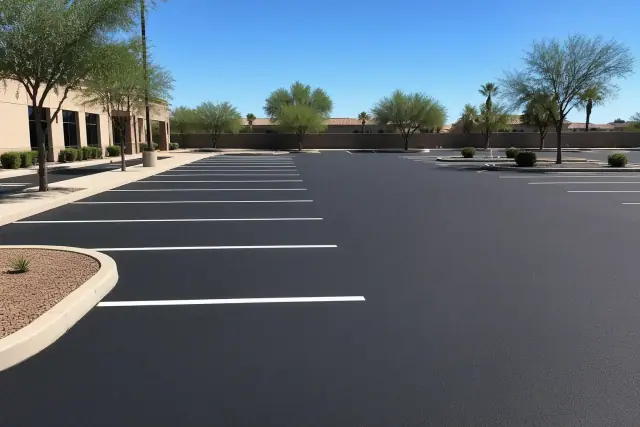
Freshly sealcoated commercial parking lot with crisp white parking stripes in Gilbert, AZ.

Asphalt sealcoating applies a protective surface treatment that helps block UV oxidation, reduce water penetration, resist fuel and oil stains, and restore a darker finished appearance. In Gilbert's intense sun, sealcoating on a regular maintenance cycle, typically every 3 to 5 years depending on traffic and exposure, is one of the most cost-effective ways to protect structurally sound asphalt.

Crack Sealing

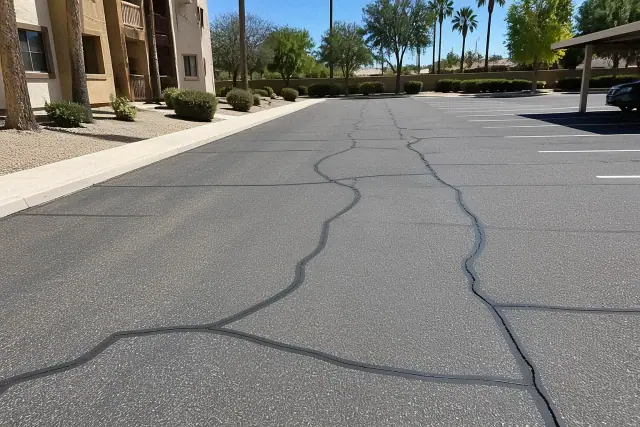
Freshly sealed cracks in an apartment parking lot under bright sun in Gilbert, AZ.

Crack sealing uses hot-applied rubberized crack filler to help stop water from reaching the base course beneath the asphalt. We clean and prepare cracks before sealing so the material bonds properly, helping limit moisture intrusion, edge raveling, and crack spread during Gilbert's heat-driven expansion and contraction cycles.

Pothole Repair

Newly repaired asphalt pothole in a commercial office drive aisle in Gilbert, AZ.

Pothole repair fixes open pavement failures that can damage vehicles, create trip hazards, and allow water to move deeper into the asphalt structure. Scottsdale Asphalt removes loose material, corrects the failed area, prepares the base, and uses hot mix asphalt for repairs intended to last longer than a quick cold-patch fill.

Parking Lot Striping

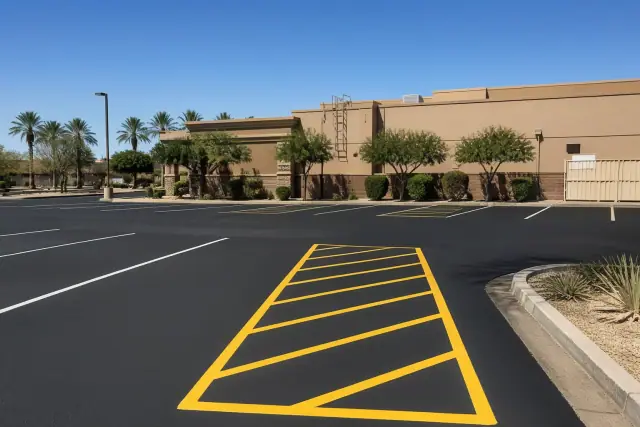
Freshly paved asphalt parking lot with new yellow and white striping at a restaurant in Gilbert, AZ.

Parking lot striping in Gilbert restores stall lines, directional arrows, ADA-accessible spaces, fire access lanes, no-parking zones, curb markings, and traffic flow after paving, sealcoating, or normal fading. We lay out markings before application and use durable traffic paint rated for Arizona's high-UV environment so commercial properties stay readable, organized, and safer for drivers and pedestrians.

Asphalt Milling & Removal

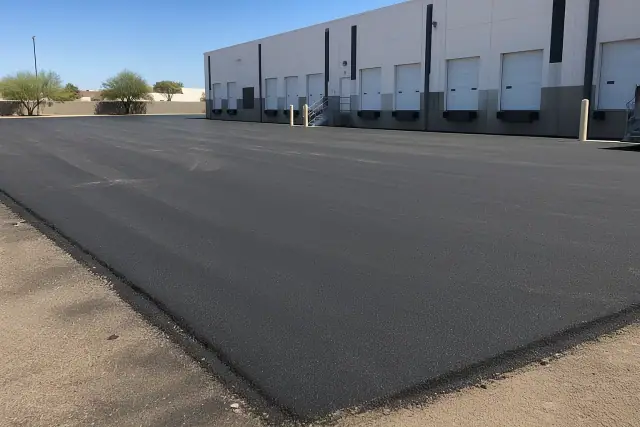
Newly paved asphalt loading dock at a warehouse in Gilbert, AZ.

Asphalt milling removal includes cold milling existing asphalt to a controlled depth, removing failed pavement, hauling away material, and preparing the surface for overlay, resurfacing, or full reconstruction. Milling helps correct height issues at curbs, garage aprons, drainage inlets, and transitions, while full removal is used when the pavement and base need to be rebuilt from below.

Pavement Planning

How to Choose the Right Asphalt Solution in Gilbert

The right asphalt scope depends on whether the pavement problem is cosmetic, surface-level, or structural. Scottsdale Asphalt compares cracking, rutting, drainage, curb height, base stability, traffic load, and maintenance history before recommending repair, resurfacing, overlay, or full reconstruction. In Gilbert, the difference between a pavement that lasts 12 years and one that reaches roughly 25 years is often the quality of the base, drainage, and compaction below the surface.

Existing Base Condition

Start with the base course, because it distributes load, manages moisture movement, and supports the asphalt mat. If the pavement flexes, has widespread alligator cracking, or sits over soft spots, a surface overlay can reflect the same failures back through the new lift instead of solving the problem.

Pavement Thickness and Load Class

Driveways, parking stalls, access roads, and loading areas do not carry the same loads. Residential paving may use a different thickness profile than commercial areas with heavy vehicles, so we match base depth, hot mix thickness, and compaction effort to the way the surface will actually be used.

Drainage and Cross-Slope

Water that ponds on asphalt works into cracks, softens base material, and accelerates bottom-up failure. On flat areas, Scottsdale Asphalt plans for positive drainage with a typical minimum 1.5% to 2% cross-slope, plus catch basins, trench drains, or curb transitions where the site geometry requires them.

Heat, UV and Mix Selection

Gilbert summer air temperatures regularly exceed 110°F, and dark asphalt can reach 150°F or higher when unshaded. We account for high-temperature performance, UV oxidation, traffic patterns, and mix temperature from plant gate to screed so compaction can be achieved before the mat cools too far.

Milling, Transitions and Curb Height

Existing pavement that already sits near curb height often cannot accept another overlay without creating drainage and transition problems. Milling 1.5 to 3 inches from the surface restores room for a new lift, improves bonding, and helps maintain clean transitions at aprons, inlets, and adjoining pavement.

Maintenance Cycle and Life Expectancy

A good asphalt plan includes maintenance timing, not just installation day. Low-traffic residential applications can reach 20 to 30 years, while high-traffic commercial lots and arterial roads may need rehabilitation in 15 to 20 years; consistent crack sealing and seal coating help the pavement approach the Federal Highway Administration's at-least-20-year pavement expectation and an approximately 25-year average life benchmark.

Gilbert Pavement Issues

Common Asphalt Problems for Gilbert Properties

Arizona heat, UV exposure, expansive soils, monsoon runoff, and heavy commercial traffic all create visible pavement problems when the underlying structure is not addressed. We look at what caused the symptom before recommending a fix, because patching the surface alone is not enough when the base, drainage, or load design has failed.

Request Pavement Inspection

Oxidized, Brittle Asphalt

UV radiation breaks down asphalt binder, changing flexible black pavement into a gray, brittle surface that cracks under normal thermal cycling. Seal coating and timely crack sealing help slow that oxidation before surface distress spreads into a larger repair issue.

Potholes and Utility Cut Failures

Potholes and failing utility patches usually start when water reaches the base or when the patch was placed over unstable material. We cut clean repair edges, remove the failed asphalt, rework the base as needed, and install hot mix so the repair is not just a temporary skim coat.

Rutting in Loading and Drive-Through Areas

At high pavement temperatures, asphalt binder can soften enough for slow-moving or stationary traffic to leave ruts. Loading dock approaches, drive-through queues, and parking stalls near building entrances need mix selection, thickness, and compaction decisions that account for those repeated load patterns.

Standing Water and Ponding

Gilbert monsoon events can drop more than an inch of rain in under an hour, making low spots and flat paving areas obvious quickly. Standing water finds cracks, saturates base material, and can turn a small drainage defect into widespread pavement settlement.

Expansive Clay Soil Movement

Gilbert's expansive clay soils swell with moisture and shrink as they dry, creating a push-pull force beneath driveways and lots. Without proper subgrade stabilization, moisture control, and compacted aggregate base, that movement can transmit into cracking, rutting, and uneven pavement.

Faded Striping and Layout Issues

Parking lot striping is more than cosmetic because faded lines, unclear fire lanes, and poorly marked accessible spaces can create confusion and liability for commercial properties. We lay out striping with ADA accessibility standards, local fire access needs, parking counts, and durable Arizona-rated traffic paint in mind.

Why Choose Us

Why Choose Scottsdale Asphalt in Gilbert?

Scottsdale Asphalt combines asphalt paving, repair, sealcoating, striping, grading, drainage, and base preparation under one practical project approach. The company operates as a licensed asphalt paving contractor with bonded and insured status required for commercial work in Maricopa County, and the crews are trained in hot mix placement and compaction procedures consistent with National Asphalt Pavement Association guidelines.

Licensed, Bonded and Insured Paving Contractor

Commercial clients need a contractor who can handle real job-site requirements, not just place asphalt. Scottsdale Asphalt operates with the licensing, bonded status, insurance, and Arizona Registrar of Contractors compliance described for general paving work in Maricopa County.

Clear Scope and Transparent Pricing

A good asphalt quote should explain excavation depth, base thickness, asphalt thickness, drainage needs, and what is included before work begins. We discuss the hot mix grade, plant logistics, access, site conditions, and project scale so pricing is clear instead of being reduced to a vague square-foot number.

Local Scheduling and Clean Job Sites

Your home, business, tenants, and customers still need access while pavement work is underway. We sequence the project to minimize disruption, keep work areas organized, remove debris, and leave driveways, parking lots, and surrounding property looking professional when the job is complete.

Simple Process

Our Asphalt Paving Process in Gilbert

The asphalt paving process is organized so customers know what is happening, when work starts, what it costs, and what to expect before, during, and after the project. Each step focuses on the conditions that matter most in Gilbert: drainage, subgrade stability, base compaction, hot mix temperature, mat density, and safe reopening.

01.

Site Assessment and Grade Staking

We begin by evaluating the existing pavement, access, grade, drainage paths, and any demolition needs. Grade staking establishes design elevations so water movement and transitions are planned before equipment starts cutting or placing material.

02.

Demolition and Subgrade Preparation

When existing asphalt must be removed, we break it out, haul material off site, and prepare the subgrade. Proof-rolling, soft spot remediation, and moisture management identify weak areas before aggregate base or hot mix is placed above them.

03.

Aggregate Base Placement and Compaction

Aggregate base is placed and compacted in lifts so it can support the pavement structure. Gilbert base work uses 3/4-inch crushed aggregate base compacted to 95% of maximum density per ASTM D1557, with soil stability and moisture content assessed before base material goes down.

04.

Hot Mix Placement and Rolling

Hot mix asphalt is placed with a calibrated paving machine to create consistent mat thickness. Roller compaction follows in breakdown, intermediate, and finish passes, because a mix that never reaches design density will fail earlier than it should.

05.

Edge Treatment and Final Grade Check

Edges, tie-ins, garage aprons, curbs, drainage inlets, and adjoining pavement are checked before the project is turned back over. These transition details help prevent lip buildup, water traps, and rough connections between old and new surfaces.

06.

Cure Period and Reopening

After placement, the surface needs time before normal vehicle traffic returns. New pavement typically requires 24 to 48 hours before vehicle traffic is reintroduced, with sealants and coatings also requiring proper cure time before reopening.

Result Examples

Asphalt Outcomes for Gilbert Homes & Businesses

Case Study 1: For a residential driveway, the right outcome is a stable surface that drains correctly, ties cleanly into the garage apron, and is built on compacted base instead of soft soil. That approach is especially important in neighborhoods with aging driveways and clay-heavy subgrade conditions.

Case Study 2: For a commercial parking lot, the result should include durable paving, planned drainage flow, ADA-conscious slopes, clear striping, and pavement thickness designed around the expected vehicle load. Retail centers, medical offices, and industrial sites need scheduling and access planning as much as they need the asphalt itself.

Case Study 3: For an aging but structurally sound lot, milling, resurfacing, seal coating, and striping can restore function without automatically moving to full reconstruction. When the base has failed, full-depth patching or removal is the more honest path because new asphalt over a compromised foundation will not hold up.

Get Better Pavement

Schedule a Gilbert
Asphalt Paving
Estimate

Tell us what you are seeing on your driveway, parking lot, private road, or commercial pavement, and we will help determine whether Asphalt Paving, Driveway Installation Replacement, Parking Lot Paving, Asphalt Repair, Asphalt Resurfacing Overlay, Asphalt Sealcoating, Crack Sealing, Pothole Repair, Parking Lot Striping, or Asphalt Milling Removal is the right scope. Scottsdale Asphalt gives Gilbert property owners a clear paving estimate before work begins, including the surface condition, base needs, drainage concerns, and access requirements that affect the job.

Asphalt Paving Help

FAQs About Asphalt Paving in Gilbert, AZ

These answers cover common questions about asphalt paving, driveway installation replacement, parking lot paving, asphalt repair, resurfacing overlay, sealcoating, crack sealing, pothole repair, striping, milling, and removal in Gilbert and the southeast Valley.

Call Our Paving Experts

Ask whether the contractor is licensed with the Arizona Registrar of Contractors and whether the license covers paving work specifically. Also ask what base preparation is included, what hot mix asphalt grade will be used, where the plant is located, and whether the written scope states excavation depth, base thickness, asphalt thickness, drainage details, and warranty coverage.

Asphalt material runs $40 to $80 per ton at the plant, and overlay or resurfacing work is commonly cited at $3 to $7 per square foot for driveway overlays. Full new construction generally costs more because excavation depth, base thickness, access, drainage, removal, striping, and site conditions can change the scope.

Well-installed asphalt has an average service life of approximately 25 years with proper maintenance. Low-traffic residential applications can reach 20 to 30 years, while high-traffic commercial lots and arterial roads may need rehabilitation in 15 to 20 years depending on load cycles, heat, UV exposure, and maintenance.

Asphalt can be placed year-round in Gilbert, but spring and fall offer the most favorable placement conditions. Ambient temperatures between 50°F and 90°F allow hot mix to cool at a controlled rate, summer work should avoid peak surface temperatures above 120°F when possible, and winter work below 40°F at night requires attention to lift thickness and compaction speed.

An overlay places new hot mix asphalt over the existing surface when the pavement and base are still structurally sound and the added height will not create transition problems. Resurfacing is often used more broadly and may include milling first, which removes old surface distress, restores grades, and creates a better bond for the new asphalt course.

Isolated surface cracks, hairline cracking, and minor localized distress may be candidates for crack sealing, patching, seal coating, or resurfacing. Widespread alligator cracking, significant rutting, or pavement that flexes under foot or vehicle traffic usually points to base failure, which requires full-depth repair or reconstruction rather than a surface treatment.

Yes. Scottsdale Asphalt handles residential driveways, HOA common area streets, commercial parking lots, industrial access roads, and municipal pavement projects throughout Gilbert and the surrounding southeast Valley, with project scales ranging from small residential repairs to multi-acre commercial paving.

A typical new asphalt driveway starts with 4 to 6 inches of compacted aggregate base followed by a 2- to 3-inch hot mix asphalt surface course. Final thickness depends on site conditions, access, drainage, base requirements, and how the driveway will be used.

The base course distributes load, manages moisture movement, and provides the stable platform the asphalt surface depends on. Gilbert's expansive clay soils require attention to subgrade stability, moisture content, proof-rolling, soft spot remediation, and compaction because skipped base work can lead to settlement, rutting, and cracking.

Seal coating is recommended on a regular maintenance cycle, typically every 3 to 5 years depending on traffic and sun exposure. Seal coating helps slow UV oxidation, repel fuel and oil spills, and restore surface appearance and friction before the pavement becomes brittle.

Rutting can happen when high temperatures soften asphalt binder and repeated slow-moving or stationary loads deform the surface. Loading dock approaches, drive-through queues, and stalls near building entrances benefit from mix selection, pavement thickness, base compaction, and placement methods designed for heavier or repeated loads.

Yes. Cold milling removes the top 1.5 to 3 inches of existing asphalt to create room for a new surface course and avoid raising pavement above curbs, garage aprons, drainage inlets, or adjoining pavement. It also creates a clean profiled bond surface for the new asphalt lift.

Asphalt removal starts by breaking and removing the existing surface and base, hauling debris away, and preparing the subgrade for reconstruction. Old asphalt can be recycled as reclaimed asphalt pavement, or RAP, which is a standard feedstock for new hot mix production.

Drainage is addressed during grade design and base construction, not after the surface is finished. Scottsdale Asphalt plans for positive drainage, typically a minimum 1.5% to 2% cross-slope on flat areas, and uses catch basins, trench drains, curb transitions, or re-grading when the site geometry requires it.

Scottsdale Asphalt serves Gilbert neighborhoods such as Val Vista Lakes, Higley Groves, Power Ranch, Morrison Ranch, Finley Farms, Seville Golf and Country Club, and the Spectrum area near Santan Village. The broader service area also includes Chandler, Mesa, Queen Creek, San Tan Valley, Tempe, Ahwatukee, Scottsdale, Fountain Hills, and surrounding Maricopa County communities.