Proudly serving Scottsdale, Mesa, Tempe, Phoenix, Chandler, Gilbert & surrounding areasCall or Text 24/7: 602-905-5399
Aerial view of a paved asphalt parking lot at an office complex in Scottsdale, AZ with desert mountains in the distance.

Asphalt Paving and Maintenance Services in Tempe, AZ

Tempe asphalt has to be built for intense sun, heavy summer heat, and fast monsoon runoff. Scottsdale Asphalt provides asphalt paving in Tempe, AZ, including driveway installation and replacement, parking lot paving, asphalt repair, asphalt resurfacing and overlay, sealcoating, crack sealing, pothole repair, parking lot striping, and asphalt milling/removal. Our crews account for Arizona soil conditions, commercial traffic loads, UV exposure, and drainage patterns before recommending a scope. Whether you need a new driveway, a corrected parking lot profile, or maintenance that keeps water out of cracks, we build the work around the pavement's actual condition.

Tempe's dark asphalt surfaces can push past 150°F in summer, and ambient temperatures regularly exceed 115°F. That heat softens binder, accelerates oxidation, and makes weak mixes vulnerable to rutting under turning vehicles. Monsoon storms add the next stress by driving water into open cracks and drainage flaws after months of dry weather. Our paving recommendations start with the actual condition of your base, grades, and traffic load so you get the right repair, overlay, or replacement scope.

We serve Tempe's 180,587 residents and the city's busy commercial corridors, including Mill Avenue, the ASU area, West Tempe industrial properties, South Tempe neighborhoods, Southern Avenue, and Rural Road. With Tempe's street paving and road improvement program running citywide through 2028, local pavement maintenance is a serious infrastructure priority; we provide clear estimates and practical asphalt scopes for private properties throughout the city.

★ ★ ★ ★ ★5/5 Customer Rating - 26 Years in the Asphalt Trade - Thousands of Paving Jobs Completed - Licensed, Bonded & Insured - Homes, Businesses & Commercial Sites
Asphalt Paving Services

Asphalt Paving Services in Tempe, AZ

Scottsdale Asphalt organizes Tempe service around the pavement work property owners request most: asphalt paving, driveway installation and replacement, parking lot paving, asphalt repair, resurfacing and overlay, sealcoating, crack sealing, pothole repair, parking lot striping, and asphalt milling/removal. Across Tempe's 40 square miles, crews support residential driveways, retail lots, apartment communities, warehouses, HOA access roads, and commercial corridors near Mill Avenue, ASU, Apache Boulevard, Elliot Road, Warner Road, Southern Avenue, and Rural Road. We also coordinate work for nearby Phoenix properties when a project crosses service areas, while keeping each scope focused on proper base prep, drainage, compaction, and maintenance timing.

Commercial Commercial Asphalt Paving

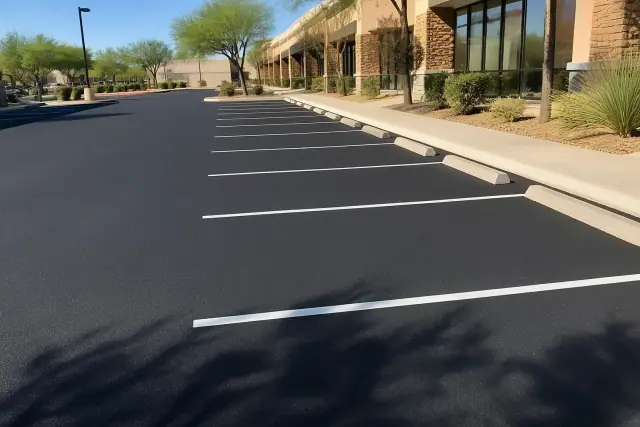
Freshly paved asphalt parking lot with clean painted lines at a retail center in Tempe, AZ.

Full-scope asphalt paving covers new surfaces and rebuilding worn pavement for residential, commercial, HOA, and industrial properties. Scottsdale Asphalt builds Tempe asphalt with proper excavation, grading, compacted aggregate base, hot mix placement, and final rolling so the surface sheds water and handles Arizona heat. We match mix selection, lift thickness, and base depth to traffic load, soil condition, and drainage needs rather than treating every driveway or lot the same.

Explore Service

Driveway Installation & Replacement

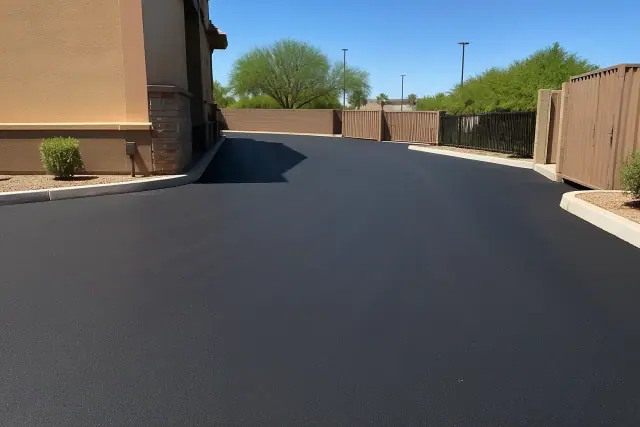
Freshly paved asphalt parking lot with clean concrete curbs behind a restaurant in Tempe, AZ.

A new or replaced asphalt driveway in Tempe needs more than a smooth top layer. We handle excavation, grading, aggregate base preparation, hot mix installation, compaction, and clean edge finishing for homes, shared drives, and private access lanes. When the base and drainage are done correctly, low-traffic residential asphalt driveways can last 20 to 30 years with regular maintenance.

Explore Service

Parking Lot Paving

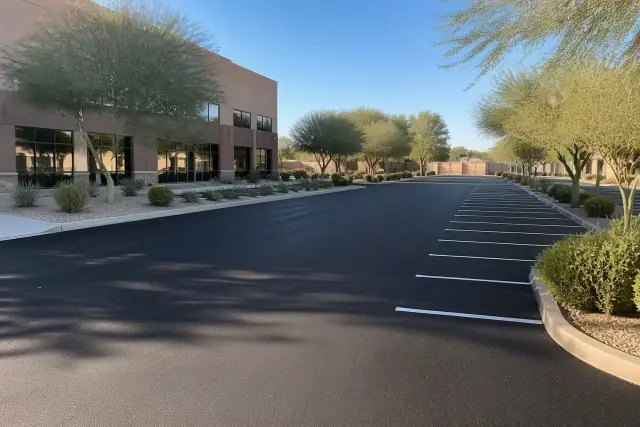
Freshly paved asphalt drive aisle with new parking lines at an office complex in Tempe, AZ.

Parking lot paving has to account for turning stress, parked loads, fuel exposure, stormwater flow, and constant thermal cycling. We pave Tempe lots for retail centers, office complexes, apartment communities, warehouses, and mixed-use properties with careful layout, curb and gutter tie-ins, accessible parking planning, and phased access where full closure is not practical. The goal is a surface that looks professional, drains correctly, and holds up under daily traffic.

Explore Service

Asphalt Repair

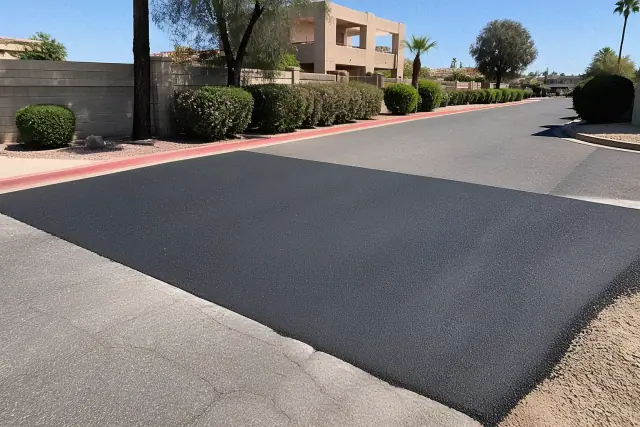
A freshly paved asphalt patch on a quiet suburban road in Tempe, AZ.

Asphalt repair targets localized failures before they spread across the full pavement surface. We review the distress pattern first, then address cracked edges, failed patches, raveling, alligator cracking, or soft areas with a repair scope that fits the actual cause. When patching is appropriate, our crews use clean cuts, proper preparation, tack coat, and compacted material so the repair bonds instead of quickly breaking apart in Tempe heat.

Asphalt Resurfacing & Overlay

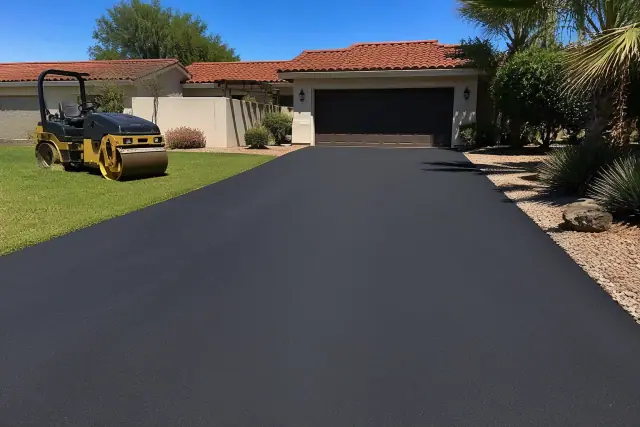
Newly paved asphalt driveway at a residential home in Tempe, AZ with a steamroller parked on the grass.

Asphalt resurfacing and overlay can be the right answer when the underlying base is still sound but the surface is oxidized, cracked, or worn out of profile. A 1.5-inch mill-and-overlay can restore grade, improve drainage, and add service life without the cost of full reconstruction. We inspect base condition first because overlay alone will not hold if the foundation has failed.

Asphalt Sealcoating

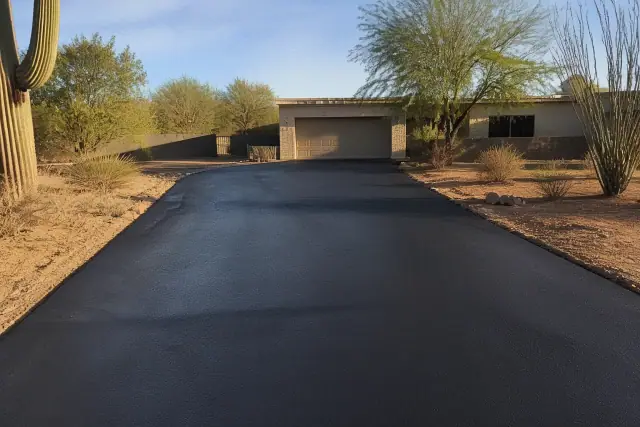
Freshly sealcoated black asphalt driveway at a desert property in Tempe, AZ.

Sealcoating protects the asphalt binder from Tempe's UV exposure, water infiltration, fuel damage, and accelerated oxidation. In Arizona conditions, many paved surfaces benefit from sealcoat on a 2 to 3 year maintenance rhythm, depending on traffic and exposure, while new asphalt should cure before its first application. We prepare the surface before coating so the finished seal is cleaner, more even, and better suited for the local climate.

Crack Sealing

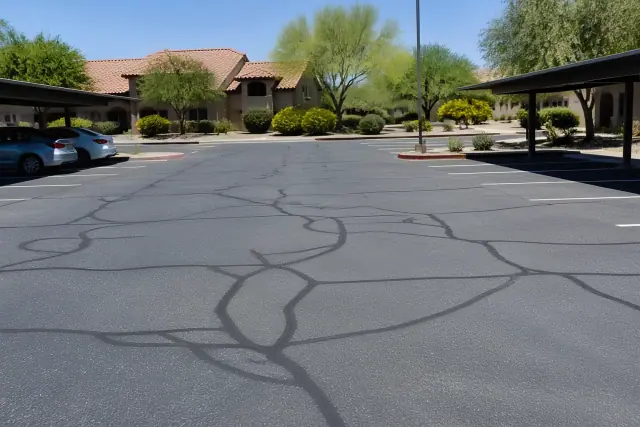
Freshly sealed asphalt cracks in a residential apartment parking lot in Tempe, AZ.

Crack sealing keeps water from using open joints and surface cracks as a path into the aggregate base. Scottsdale Asphalt applies hot-pour crack sealant before sealcoating or resurfacing recommendations when the cracks are suitable for sealing. This step is especially important before monsoon storms, because water trapped below the surface can turn minor cracking into potholes and base failures.

Pothole Repair

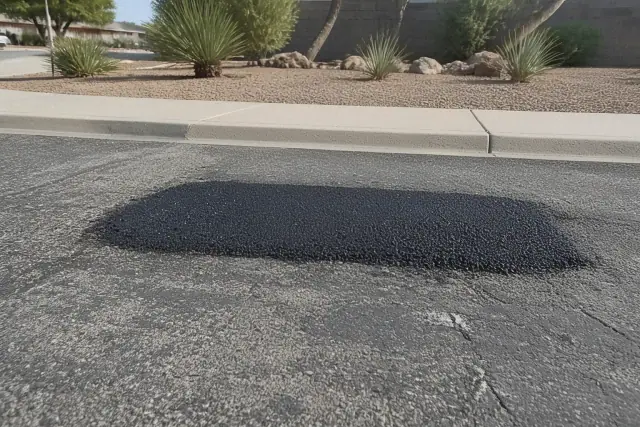
Freshly repaired asphalt pothole on a suburban street edge in Tempe, AZ.

Pothole repair in Tempe starts with understanding why the hole formed, not just filling the visible depression. Water infiltration, weak base areas, failed patches, and traffic stress can all undermine the pavement until the surface breaks apart. Our repair approach uses squared edges, cleaning, tack coat, and compacted asphalt where appropriate so the patch has a better chance of staying in place through heat, traffic, and runoff.

Parking Lot Striping

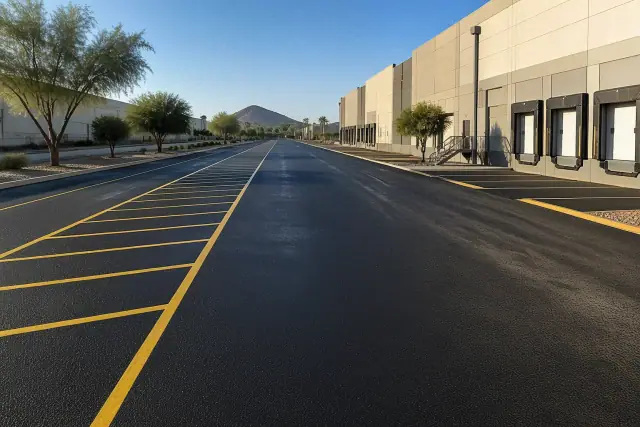
Freshly paved asphalt loading drive with crisp yellow parking lines at a warehouse in Tempe, AZ.

Parking lot striping restores order, improves traffic flow, and makes a newly paved or sealcoated lot look complete. We stripe stalls, loading zones, fire lanes, ADA spaces, directional arrows, and stenciled markings for Tempe commercial and residential properties. Layout work accounts for accessible parking requirements, fire-lane visibility, and traffic paint suited to Arizona heat and UV exposure.

Asphalt Milling & Removal

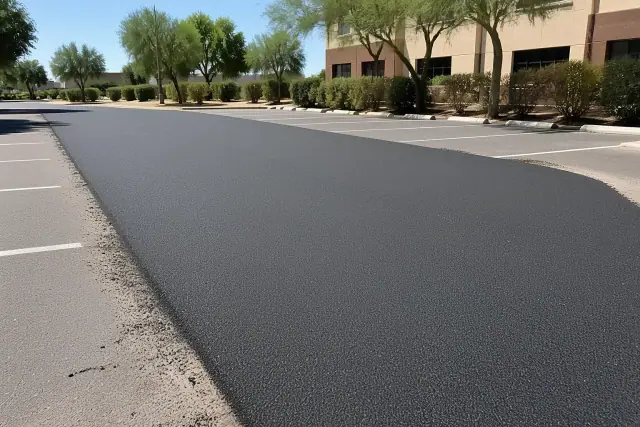
Freshly paved asphalt section in a commercial parking lot under bright sunlight in Tempe, AZ.

Asphalt milling and removal prepares worn pavement for overlay, profile correction, or full replacement when the existing surface can no longer perform as-is. Milling can help restore grade, improve tie-ins at curbs and entrances, and create a cleaner surface for a new asphalt layer when the base remains sound. When the pavement or base has failed beyond resurfacing, removal allows the sub-grade and aggregate base to be rebuilt correctly before new hot mix is placed.

Asphalt Solution Selection

How to Choose the Right Asphalt Solution in Tempe

The right asphalt solution depends on what is failing, not just what the surface looks like. A gray oxidized lot with a sound base may be a sealcoat or overlay candidate, while alligator cracking, rutting, or edge failure can point to deeper base problems. In Tempe, the decision also has to account for extreme heat, monsoon drainage, traffic load, and the regional mix of decomposed granite and expansive clay soils.

Existing Pavement & Base Condition

Start by determining whether the base is still supporting the pavement. Surface oxidation and shallow cracks can often be maintained, but alligator cracking, pumping, soft areas, and repeat potholes suggest that the foundation is moving or holding water. When the base has failed, full reconstruction is usually more reliable than covering the issue with new asphalt.

Traffic Load & Property Use

Driveways, apartment lots, warehouse approaches, and road-grade surfaces all carry different loads. Heavy vehicles, turning movements, delivery traffic, and parked loads call for deeper base sections, appropriate lift thickness, and compaction targets that match the property use. We specify the pavement section around the real load instead of using one formula for every Tempe surface.

Drainage Grade & Water Flow

Water is one of the fastest ways to turn a sound surface into a failing one. Proper crown, cross-slope, longitudinal grade, and drain tie-ins move monsoon runoff away from the pavement before it can soften the base. If water stands on the surface after rain, drainage should be corrected before overlay or sealcoat work is recommended.

Heat & UV Exposure

Tempe pavement needs materials and maintenance that can tolerate long periods of heat and UV exposure. Surface temperatures above 150°F accelerate binder aging, so older asphalt can become brittle, gray, and easier for cracks to spread through. A high-temperature mix, regular crack sealing, and timely sealcoat help protect the mat from avoidable deterioration.

Soil & Sub-Grade Stability

The eastern Phoenix metro includes decomposed granite and expansive clay layers that react differently to load and moisture. If the sub-grade is soft or poorly compacted, extra asphalt thickness alone will not make the surface perform. We look at soil behavior, aggregate base depth, and edge support before deciding how the pavement should be rebuilt.

Maintenance Timing & Access

Timing matters because businesses need lots reopened, homeowners need driveway access, and asphalt must be placed in workable conditions. Spring and fall are often preferred for paving in Arizona, but summer and mild winter work can still be feasible when mix temperature, rolling timing, and overnight conditions are considered. We plan phasing and access so the pavement scope fits the property's daily operations.

Tempe Pavement Issues

Common Asphalt Problems for Tempe Properties

Most asphalt failures in Tempe start with a combination of heat, water, traffic stress, and weak preparation. UV exposure oxidizes the binder, monsoon runoff follows cracks into the base, and heavy turning movements can rut softened pavement. These symptoms should be diagnosed before repair so a small surface issue is not treated like a structural rebuild—or a structural problem treated like a cosmetic patch.

Request Pavement Inspection

Sun-Bleached Oxidation

Oxidized asphalt turns gray, dries out, and loses the flexibility it needs to resist cracking. Tempe's intense sun accelerates this process, especially on surfaces that go too long between sealcoat cycles. Catching oxidation early with crack sealing and sealcoating is much less disruptive than waiting until the surface ravels and loses profile.

Monsoon Water Intrusion

Summer dry heat can open cracks, and monsoon storms can push water into those same openings quickly. Once water reaches the aggregate base, it softens support and creates the cracking cycles that lead to potholes. Proper crack sealing, drainage correction, and timely patching help stop moisture from turning a surface flaw into a base failure.

Potholes & Patch Failures

Potholes usually form after water, traffic, and weak edges combine under the asphalt surface. Quick patches that skip saw-cut edges, cleaning, tack coat, or base repair can ravel in Tempe's heat within a season or two. A pothole that could have been a small repair can become a much larger base repair when it is ignored.

Rutting from Heat & Turning Traffic

Rutting appears when traffic pushes softened asphalt out of shape, often in turning lanes, delivery paths, and heavy parking areas. In Tempe, high surface heat makes insufficiently stiff mixes and thin pavement sections more vulnerable. Commercial surfaces may need stronger mix selection, deeper base construction, and better compaction than residential areas.

Standing Water & Drainage Failures

Standing water is a warning sign that grade, cross-slope, or drainage outlets are not working. Water that sits on asphalt can soften the base, enter cracks, and shorten the surface's service life. Correcting drain transitions, low spots, or edge flow before paving is usually less expensive than fixing water-damaged pavement later.

Faded Striping & Access Confusion

Sun, traffic, and fuel exposure fade parking lot markings over time. Worn striping makes stalls, fire lanes, loading zones, ADA spaces, and arrows harder to read, especially in busy retail and multi-family lots. Re-striping after paving or sealcoating restores organization and helps drivers use the lot more predictably.

Why Choose Us

Why Choose Scottsdale Asphalt in Tempe?

Scottsdale Asphalt brings Tempe property owners one contractor for installation, resurfacing, repair, sealcoating, striping, and drainage-related asphalt work. We operate as a licensed and insured asphalt contractor in Tempe, carrying the licensing required by the Arizona Registrar of Contractors and the bonding required for commercial paving work in Maricopa County. You get a clear written estimate, a practical recommendation, and coordination that keeps access needs in mind for homes, retail centers, apartments, warehouses, and industrial properties.

Licensed, Insured & Bonded Contractor

Licensing, insurance, and commercial bonding matter when paving affects access, drainage, liability, and long-term property value. Our Tempe paving work is handled as a complete scope rather than a hand-off between separate contractors for base work, paving, repair, striping, and drainage. That single point of contact keeps communication clearer from estimate through final cleanup.

Tempe Climate & Soil Knowledge

We build recommendations around Tempe's heat, UV exposure, monsoon runoff, and soil conditions. That means looking at binder aging, rutting risk, drainage grade, aggregate base depth, and edge support before selecting a repair or installation method. Local knowledge helps avoid generic pavement scopes that fail early in desert conditions.

Clear Scopes & Phased Scheduling

Asphalt work disrupts driveways, parking lots, and loading access, so scheduling and scope clarity are important. We provide written estimates, explain whether maintenance, overlay, or reconstruction is the right fit, and coordinate phased work when full closure is not practical. If crack sealing and sealcoating can extend a parking lot's life by five years, we recommend that; if the base has failed, we explain why reconstruction is the right call. Each project is left clean, with debris removed and surrounding areas respected.

Simple Process

Our Asphalt Paving Process in Tempe

Every Tempe asphalt project begins with a practical look at the surface, base, drainage, access needs, and intended use. The process is designed to identify why the pavement is failing before recommending a scope. From grading and aggregate base to hot mix placement, compaction, finishing, and cleanup, each step protects the service life of the final surface.

01.

Site Assessment & Distress Review

Before pricing a project, we review existing pavement distress such as alligator cracking, rutting, edge failure, oxidation, potholes, and drainage problems. This first visit also confirms the property type, traffic load, access limitations, and whether the existing base appears sound enough for maintenance or overlay. You receive a written scope and price before equipment arrives.

02.

Grading & Drainage Planning

We establish the slope and drainage path needed to move water away from the finished surface. That can include adjusting cross-slope, confirming longitudinal grade, tying into existing curb and gutter, or planning catch basins, trench drains, and swale transitions. Good grade work is especially important before monsoon runoff exposes weak spots.

03.

Base Preparation & Compaction

For new installations, we excavate and prepare the sub-grade, then place and compact aggregate base to the depth required for the application. Residential work commonly uses 4 to 6 inches of compacted aggregate base, while commercial and heavy-vehicle areas may need deeper construction. Base compaction is checked before asphalt is placed.

04.

Hot Mix Placement & Rolling

Hot mix asphalt is placed while it is still workable, typically between 275°F and 325°F. Steel drum and pneumatic rollers compact the mat immediately to achieve density, strength, and a smoother finished profile. Proper overlap, rolling pattern, and joint compaction reduce the risk of weak seams.

05.

Edge Finishing, Joints & Striping

After placement, edges, transitions, and joints are finished so the pavement sheds water and meets adjacent surfaces cleanly. If the project includes a parking lot, striping is completed after paving or sealcoating with stalls, arrows, loading zones, fire lanes, ADA markings, and stencils as needed. Final details help the surface function as well as it looks.

06.

Cleanup & Maintenance Guidance

Once the paving work is complete, debris is removed and the surrounding property is left neat. We review the completed scope, note any cure or access guidance, and explain maintenance steps such as crack sealing and future sealcoat timing. Clear closeout helps owners protect the investment instead of guessing what the surface needs next.

Result Examples

Asphalt Outcomes for Tempe Properties & Businesses

Case Study 1: For residential driveways and shared access lanes, careful excavation, aggregate base, grade shaping, and clean edges create a surface better suited to Tempe's heat and runoff. The goal is a driveway or HOA lane that drains correctly and avoids premature edge failures.

Case Study 2: For retail, office, apartment, and warehouse parking lots, a resurfacing or paving scope can combine lot rehabilitation, drainage planning, striping, and phased access. That helps properties near Tempe's commercial corridors stay usable while improving traffic flow and surface appearance.

Case Study 3: For older parking lots, industrial approaches, and surfaces with profile problems, milling and removal create a cleaner path to overlay or reconstruction. The outcome depends on confirming whether the base is still sound, correcting grade and drainage, and placing new asphalt at the right lift thickness and compaction density. Scottsdale Asphalt plans these projects around heavier loads, curb tie-ins, access needs, and long-term maintenance rather than simply covering worn pavement.

Get Better Asphalt

Schedule a Tempe
Asphalt
Consultation

Ready to improve a Tempe driveway, parking lot, worn asphalt surface, or maintenance scope? Request an estimate and we'll evaluate the pavement condition, drainage, base needs, access requirements, and best-fit scope for paving, repair, overlay, sealcoating, crack sealing, pothole repair, striping, or milling/removal.

Local Asphalt Help

FAQs About Asphalt Paving in Tempe, AZ

These answers cover common questions about asphalt paving, driveway installation and replacement, parking lot paving, asphalt repair, resurfacing, sealcoating, crack sealing, pothole repair, parking lot striping, milling, permits, and maintenance for Tempe homes, businesses, HOAs, and industrial properties.

Call Our Asphalt Experts

Properly installed and maintained asphalt has an average service life of approximately 25 years. Low-traffic residential driveways in Tempe can reach 20 to 30 years when base and drainage are correct. Moderate-traffic parking lots often see 15 to 20 years, while high-traffic commercial or industrial surfaces may need rehabilitation in 10 to 15 years. Tempe's heat and UV exposure make regular crack sealing and sealcoating especially important.

Spring and fall are usually preferred, especially March through May and September through November. Those seasons generally support good compaction without the binder cooling too quickly or staying soft from extreme heat. Summer paving is possible in Tempe when crews adjust rolling timing, and mild winter work can be feasible unless overnight temperatures below 40°F interfere with compaction.

The process starts with site assessment, drainage review, and evaluation of the base. If needed, old pavement is milled or removed, the sub-grade is prepared, aggregate base is placed and compacted, tack coat is applied, and hot mix asphalt is installed and rolled to the required density. Final steps include edge finishing, joint work, cleanup, and striping when the project requires it.

Tempe asphalt paving cost depends on square footage, existing surface removal, base depth, site access, drainage complexity, and material pricing at the time of the estimate. Residential driveways are usually measured in hundreds of square feet, while commercial parking lots can run into thousands. Scottsdale Asphalt provides a written estimate that separates the paving scope from base work and other required items so you understand what is included.

Permit requirements depend on the scope. New driveway installations that connect to a public street typically require a City of Tempe encroachment permit through the Transportation and Sustainability Department. Large commercial projects or work in the public right-of-way may require city or county permits and inspection, while private-property maintenance may not. Scottsdale Asphalt handles required applications for projects that need them.

A quality sealcoat can protect asphalt on a 3 to 5 year cycle in some conditions, but Arizona's climate often makes every 2 to 3 years more appropriate than the 4 to 5 year interval common in cooler states. Crack sealing should happen before sealcoat so open cracks do not trap moisture below the sealer. New asphalt should cure for at least 90 days before the first sealcoat application.

Asphalt repair targets localized damage such as potholes, cracks, edge failures, or small failed areas. Resurfacing, or overlay, places a new asphalt layer across a broader surface when the existing base is still structurally sound. A typical overlay may be about 1.5 to 2 inches thick, while full reconstruction is needed when the base has failed.

Scottsdale Asphalt provides asphalt paving, driveway installation and replacement, parking lot paving, asphalt repair, asphalt resurfacing and overlay, asphalt sealcoating, crack sealing, pothole repair, parking lot striping, and asphalt milling/removal in Tempe. Each recommendation is based on pavement condition, base stability, drainage, traffic load, and access needs. That helps property owners choose the work that fits the surface instead of paying for a temporary cover-up.

Tempe's dark asphalt can reach surface temperatures above 150°F, and summer ambient temperatures regularly exceed 115°F. At those temperatures, asphalt binder softens and oxidizes faster, which can lead to rutting, gray brittle surfaces, and crack growth. A heat-appropriate mix, good compaction, and timely maintenance help reduce early deterioration.

Resurfacing works best when the pavement surface is worn but the underlying base is still sound. A 1.5-inch mill-and-overlay can restore grade and improve drainage, but it will not solve deep alligator cracking, soft base areas, or drainage failures by itself. When base failure is present, removal and reconstruction are the more reliable option.

Monsoon storms can turn open cracks into water paths that reach the aggregate base. Once the base softens, traffic can create edge failures, potholes, and wider cracking. Crack sealing, correct slope, catch basins, trench drains, and swale transitions help move runoff away from the pavement.

Scottsdale Asphalt serves Tempe neighborhoods and commercial areas including North Tempe, South Tempe, Central Tempe, East Tempe, the Mill Avenue district, the ASU area, Papago Park, Apache Boulevard, Southern Avenue, University Drive, Rural Road, and West Tempe industrial properties. The service area also includes Scottsdale, Mesa, Chandler, Gilbert, Phoenix, Guadalupe, and the surrounding Maricopa County communities. Regional coordination matters because permitting, inspection, and utility requirements can vary by jurisdiction.

Potholes form when cracks let water under the asphalt and traffic breaks down unsupported areas. The problem can escalate quickly: what starts as a $300 patch can become a $3,000 base repair when water undermines the pavement. Saw-cut patching, tack coat, and base correction are more durable than loose material thrown into the hole.

Parking lot paving can include layout review, curb and gutter tie-ins, stormwater flow planning, accessible parking areas, loading zones, fire lanes, and phased access planning. After paving or sealcoating, parking lot striping adds stalls, arrows, ADA markings, stencils, and fire-lane visibility. Scottsdale Asphalt handles both paving and striping details so the finished lot is organized, usable, and professional.

Scottsdale Asphalt operates as a licensed and insured asphalt contractor in Tempe. The company carries the licensing required by the Arizona Registrar of Contractors and the bonding required for commercial paving work in Maricopa County. That matters for projects involving access, drainage, public-right-of-way coordination, and commercial property requirements.