Proudly serving Scottsdale, Mesa, Tempe, Phoenix, Chandler, Gilbert & surrounding areasCall or Text 24/7: 602-905-5399
Aerial view of a paved asphalt parking lot at an office complex in Scottsdale, AZ with desert mountains in the distance.

Asphalt Crack Sealing and Preservation Services in Scottsdale, AZ

Scottsdale Asphalt provides professional crack sealing services for asphalt surfaces across Scottsdale, AZ. We serve residential driveways, commercial parking lots, HOA communities, and private roadways throughout the metro area. Our work includes hot-applied rubberized sealants, cold-pour crack filler systems, and pre-treatment crack filling ahead of micro seal applications. Every repair is matched to crack width, pavement age, traffic loading, and Arizona temperature extremes.

Scottsdale's pavement takes a serious beating from surface temperatures that regularly exceed 150°F, intense UV exposure, monsoon moisture, and repeated thermal expansion and contraction. Once cracks open, water can reach the base layer and turn a $1.00-per-linear-foot repair into replacement work costing many times more. Our process starts with the cleaning and preparation most failed crack repairs never receive. We remove debris, oxidized edges, vegetation, and moisture-contaminated material so the sealant has a clean surface to bond to.

We focus on preventative pavement maintenance that keeps water out of the aggregate base, extends usable surface life, and helps property owners avoid avoidable pothole patching, base repair, and full-depth replacement.

Scottsdale Asphalt provides crack sealing for residential and commercial pavement throughout Scottsdale, Paradise Valley, Tempe, Mesa, Chandler, Gilbert, Phoenix, and surrounding Maricopa County communities.

★ ★ ★ ★ ★5/5 Customer Rating · 26 Years in the Asphalt Trade · Thousands of Paving Jobs Completed · Licensed, Bonded & Insured · Homes, Businesses & Commercial Sites

Crack Sealing Services & Benefits

What Is Crack Sealing?

Crack sealing is a preventative asphalt maintenance process that cleans an existing crack, prepares the crack walls, and fills the opening with a flexible sealant designed to block water infiltration. In Scottsdale, that flexibility matters because asphalt expands in summer heat and contracts overnight, constantly moving along existing fracture lines.

Hot-applied rubberized crack sealing is typically used on working cracks that need a durable, watertight seal. Cold-pour crack filling is better suited to hairline cracks, shallow surface fractures, or pre-treatment before a broader surface application such as sealcoat or micro seal.

The goal is not to make aged asphalt look new; it is to keep monsoon water, fines, and debris from reaching the aggregate base and subgrade. When the base stays stable, the pavement is less likely to flex under traffic and form potholes or alligator cracking.

Benefits of Crack Sealing

Early crack sealing protects pavement while it is still structurally sound. It costs far less than reactive patching or replacement and gives property owners a practical way to slow deterioration before damage spreads below the surface.

  • Helps prevent monsoon water from softening the aggregate base and subgrade.
  • Reduces the risk of potholes by interrupting the crack-to-base-failure cycle.
  • Extends pavement life by 6 to 7 years when applied to asphalt in good structural condition.
  • Costs about $1.00 to $3.00 per linear foot for professional hot-applied treatment.
  • Keeps small defects from escalating into pothole repairs that can cost hundreds of dollars per repair.
  • Works as a pre-treatment before micro seal or sealcoat for a smoother, more consistent finish.
  • Allows flexible sealant to move with pavement through Scottsdale temperature swings.
  • Supports residential, HOA, commercial, and private-road maintenance plans without unnecessary replacement.
Crack Sealing Services

Crack Sealing Services

Scottsdale Asphalt offers crack sealing services built around pavement condition, crack type, traffic use, and the timing of any planned surface treatment. We separate structural working cracks, shallow surface cracking, concrete joint issues, and pre-treatment needs so the repair method fits the actual pavement instead of forcing one material into every crack.

Hot-Applied Rubberized Crack Sealing

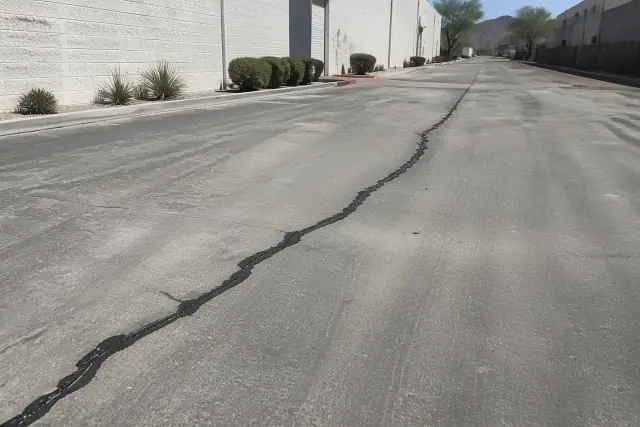
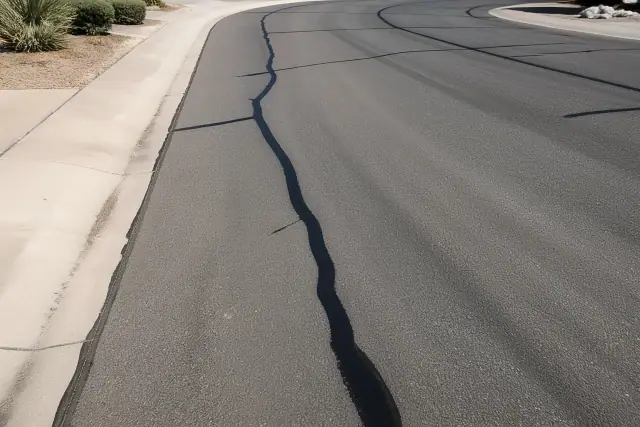
Freshly applied black rubberized crack sealant on an asphalt residential street in Scottsdale, AZ.

Hot-applied rubberized sealant is the preferred option for working cracks on actively used asphalt. The material is heated, placed into a clean prepared crack, and finished flush so it can stretch and compress with the pavement through heat cycles and monsoon seasons.

Request Estimate

Cold-Pour Crack Filling

Freshly sealed asphalt crack on a warehouse loading dock in Scottsdale, AZ.

Cold-pour filler is useful for hairline cracks, shallow surface fractures, and budget-sensitive maintenance where a full hot-applied setup is not the right fit. It is quicker to apply than hot rubberized material, but it is not the right choice for wide structural cracks or heavily loaded areas.

Request Estimate

Pre-Treatment Crack Filling Before Micro Seal

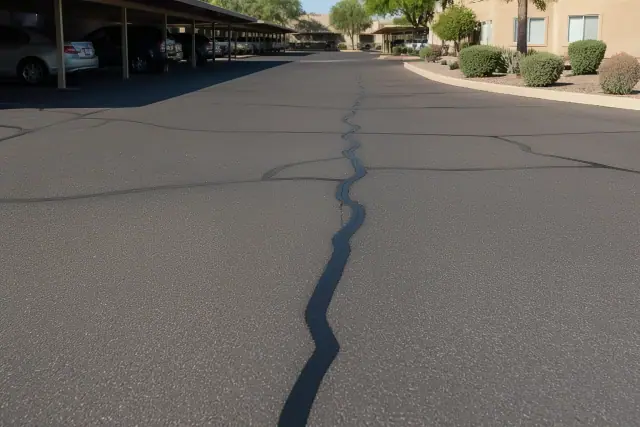
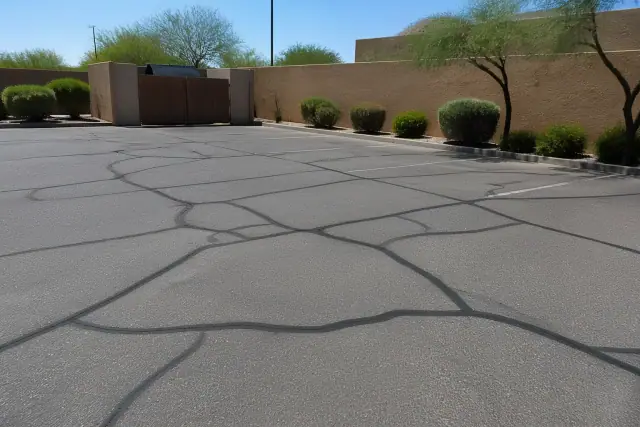
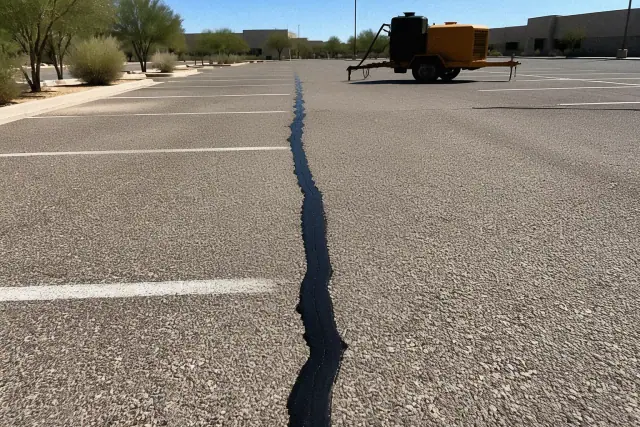
Freshly sealed asphalt cracks on a parking lot surface in Scottsdale, AZ.

Crack filling before micro seal helps create a smoother and more consistent finished surface. This sequence mirrors the pavement preservation logic used by the City of Scottsdale, where crack fill is used as a standard pre-treatment before micro seal applications.

Request Estimate

Residential Driveway Crack Sealing

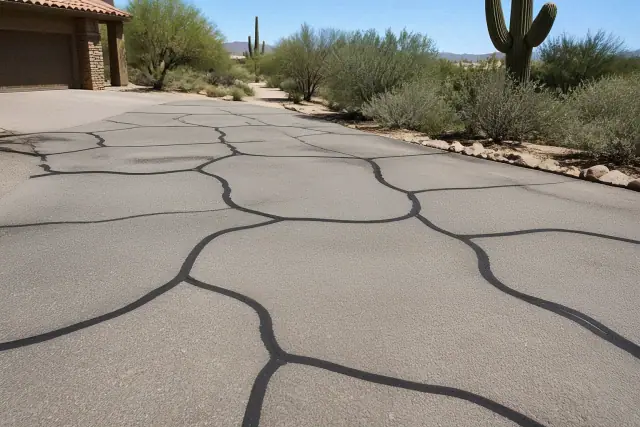
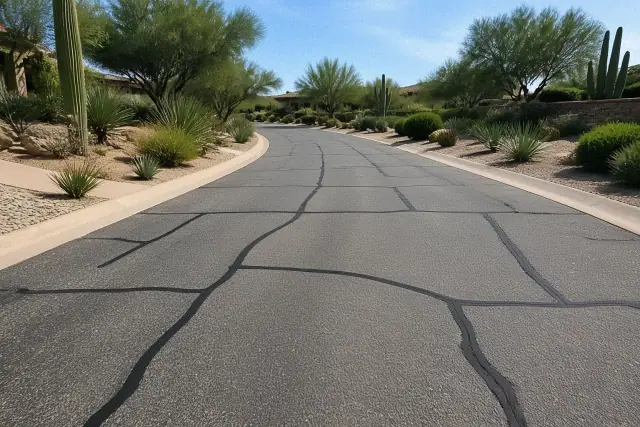
Freshly sealed cracks on an asphalt driveway at a desert home in Scottsdale, AZ.

Residential driveways in Scottsdale often show thermal cracks, edge cracks, and oxidation before the base fails. We scope driveway repairs by total crack footage, width, and preparation requirements, then recommend sealing and surface protection when the pavement is still worth preserving.

Request Estimate

Commercial Parking Lot Crack Sealing

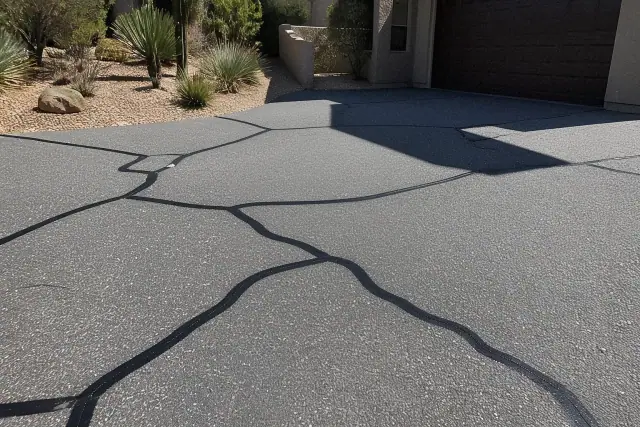
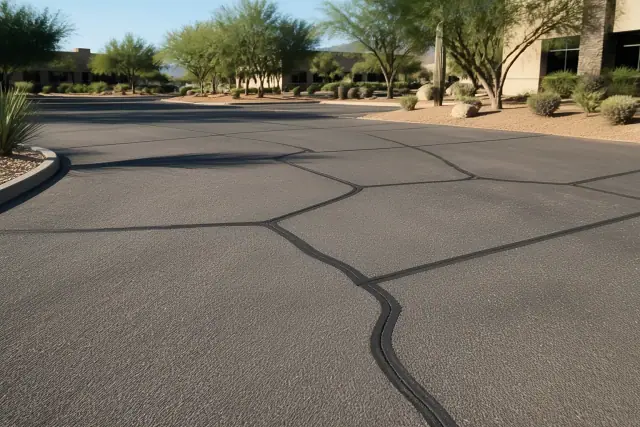
Freshly sealed cracks with black rubberized sealant on a residential asphalt driveway in Scottsdale, AZ.

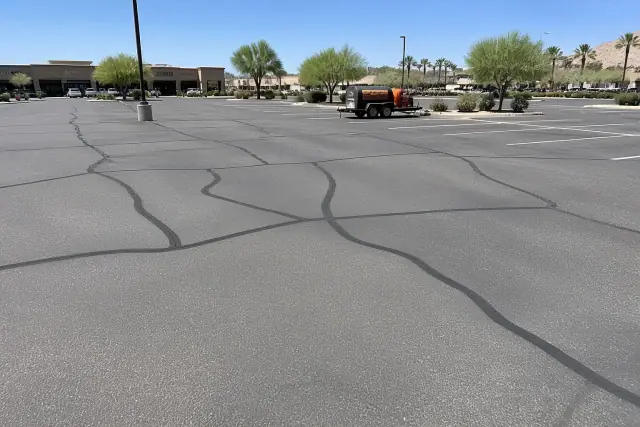
Commercial parking lots require planning beyond material placement. We account for traffic flow, tenant access, phasing, crack density, and equipment mobilization so larger surfaces can be treated efficiently while minimizing disruption to normal property use.

Request Estimate

Concrete Crack and Joint Sealing

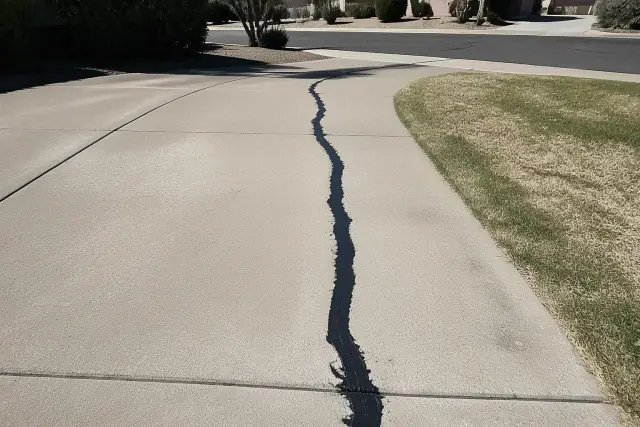
Freshly applied black rubberized crack sealant on an office driveway in Scottsdale, AZ.

Concrete cracks and expansion joints require different sealants than asphalt. For concrete flatwork and pavement joints, the proper approach uses materials such as polyurethane or silicone-based rubberized sealants, clean bare concrete, backer rod when needed, and a tooled profile that sheds water.

Request Estimate
Crack Sealant Options

Types of Crack Sealing Options

Different crack sealing systems solve different pavement problems. The right choice depends on whether the crack is moving, how wide and deep it is, whether the surrounding pavement is structurally sound, and whether a surface treatment will follow.

Freshly sealed cracks with dark rubberized sealant on a quiet residential street in Scottsdale, AZ.

Hot-Applied Rubberized Sealant

Hot-applied rubberized sealant is used when long service life and flexibility are the priority. The material is selected for the way Scottsdale asphalt moves in intense heat and sudden rain rather than for the lowest initial material cost, because the wrong filler can debond within 18 months.

  • Generally lasts 7 to 8 years when installed on suitable, properly prepared cracks.
  • Designed to stretch and compress as pavement expands and contracts.
  • Appropriate for structural cracks in active driveways, private roads, and commercial lots.
  • Requires heating equipment, proper material temperature control, and clean crack walls.
  • Best for cracks where long-term water exclusion matters more than fastest installation.
Request Estimate
Asphalt crack sealing on a parking lot at a restaurant in Scottsdale, AZ.

Cold-Pour Crack Filler

Cold-pour crack filler is a practical option for specific crack types and maintenance goals. It does not require specialized heating equipment, but it should be used only where its limitations fit the pavement condition.

  • Typically lasts 3 to 5 years and may need more frequent maintenance cycles.
  • Works best on hairline cracks and shallow surface fractures.
  • Can be used before sealcoat or micro seal when the crack pattern is appropriate.
  • Not recommended for wide structural cracks on high-traffic surfaces.
  • Applied with tools such as squeegees to help blend with the surrounding pavement.
Request Estimate
Freshly crack-sealed asphalt parking lot with dark rubberized sealant in Scottsdale, AZ.

Routed Crack Sealing

Routing creates a uniform reservoir in the crack so hot-applied sealant can be placed at the correct volume and geometry. This preparation step helps the sealant move properly with the pavement instead of peeling away from uneven crack edges.

  • Typically considered for hot-applied sealant work on suitable crack widths.
  • Creates consistent crack geometry before material placement.
  • Helps remove oxidized edges and loose material from the crack path.
  • Supports better sealant adhesion along both crack walls.
  • Not used blindly; the pavement condition determines whether routing is appropriate.
Request Estimate
Freshly applied black asphalt crack sealant on a commercial parking lot in Scottsdale, AZ.

Crack Filling Before Sealcoat or Micro Seal

Crack filling should come before sealcoat or micro seal because a thin surface film will not stop water from entering open cracks below it. Treating cracks first gives the surface treatment a better foundation and a more consistent appearance.

  • Fills open cracks before a wider surface treatment is applied.
  • Helps prevent cracks from reflecting through a new coating within one season.
  • Supports the micro seal pre-treatment sequence described in Scottsdale pavement preservation work.
  • Improves surface uniformity before the final pavement protection layer.
  • Requires full curing of crack treatment before the overlaying surface treatment.
Request Estimate
Black rubberized crack sealant applied to a concrete driveway joint on a residential street in Scottsdale, AZ.

Concrete Joint and Crack Sealants

Concrete does not flex like asphalt, so concrete cracks and joints need sealant systems made to bond to portland cement concrete surfaces. The work focuses on clean concrete, proper sealant depth, and joint geometry that handles Scottsdale thermal movement.

  • Uses polyurethane or silicone-based rubberized sealants rather than asphalt-specific products.
  • Requires cleaning to bare concrete for reliable adhesion.
  • May use backer rod to control depth and shape factor.
  • Can be tooled slightly concave so the surface sheds water.
  • Applies to concrete flatwork, driveways, pavement joints, and expansion joints.
Request Estimate
Finding Your Right Fit

Choosing the Right Crack Sealing Approach

The best crack sealing system depends on crack movement, width, depth, contamination, pavement age, and traffic loading. We look for signs of base failure before recommending a preservation treatment, because crack sealing is most effective when the asphalt is still structurally sound.

Arizona-Ready Sealant Selection

Arizona heat can make ordinary asphalt crack filler too soft at high temperatures and brittle when temperatures drop. We select polymer-modified or rubberized materials for the exposure level of each surface, whether that is a shaded driveway in McCormick Ranch or a fully exposed lot near the Loop 101 corridor.

Thorough Crack Cleaning and Preparation

Preparation determines whether sealant bonds or fails. We remove dirt, debris, vegetation, oxidized material, and trapped moisture before placement, and we route cracks when the repair calls for a uniform sealant reservoir.

Residential, HOA, and Commercial Scope Planning

A driveway, an HOA roadway, and a multi-acre parking lot require different planning. We account for crack density, total footage, material volume, access needs, phasing, and traffic restrictions before work begins.

What Sets Us Apart

Why Choose Scottsdale Asphalt for Crack Sealing?

We recommend crack sealing when it is enough and identify base failure when preservation no longer makes economic sense. Our estimates explain material choice, preparation method, linear footage, accessibility, and traffic-control needs before the project starts.

Request Assessment

Surface Oxidation and UV Damage

Scottsdale grew from a town of 2,000 residents at incorporation in 1951 to more than 241,000 people as of the 2020 census, leaving decades of asphalt exposed to desert weather. UV radiation breaks down the binder that holds aggregate together, turning the surface grey, brittle, and easier to crack.

Monsoon Water Infiltration

Open cracks give monsoon water a direct path below the pavement. Once water reaches the aggregate base and subgrade, it can soften compacted material, wash out fines, and create voids that make the surface flex under traffic.

Thermal Expansion Cracks

Pavement expands during 115°F summer heat and contracts overnight, widening existing cracks and starting new ones. In Scottsdale, a single 24-hour period can bring pavement surface temperature swings of more than 60°F, so flexible sealant is essential.

Base Failure and Alligator Cracking

Alligator cracking, depressions, and soft spots indicate that the base may already be compromised. Crack sealing can block water, but it cannot restore structural strength where the pavement is already flexing and failing under load.

High-Traffic Parking Lot Cracks

Wheel paths, tenant traffic, and delivery access can turn small parking lot cracks into fatigue patterns. Commercial crack sealing must account for phasing, access, and the possibility of thousands of linear feet of cracks across larger lots.

Wide or Contaminated Cracks

Cracks wider than 1 inch or cracks with significant depth require more material and closer evaluation. Vegetation, fine particles, moisture, and oxidized edges also add preparation time because sealant placed over contamination fails at the bond line.

How It Works

Our Crack Sealing Process

Our process follows the pavement condition from inspection through curing. Each step is designed to keep the repair bonded, flexible, watertight, and appropriate for Scottsdale asphalt rather than simply filling visible gaps.

01.

Pavement Inspection and Crack Mapping

We walk the surface and assess each crack by width, depth, pattern, and likely cause. Sealant specifications commonly target cracks between 1/4 inch and 1 inch wide for hot-applied rubberized material, and we flag sections where base failure may require more than sealing.

02.

Crack Cleaning and Surface Preparation

We use compressed air, wire routing, and mechanical cleaning methods to remove dirt, debris, vegetation, oxidized material, and trapped moisture. Clean crack walls are essential because sealant placed over contamination can fail within months regardless of material quality.

03.

Routing When Required

When routing is appropriate, we mechanically cut a uniform reservoir into the crack before sealant placement. That reservoir holds the correct material volume and allows the sealant to move as the pavement expands and contracts.

04.

Sealant Selection and Application

Hot-applied rubberized sealant is melted in a direct-fire or oil-jacketed melter/applicator at 370°F to 400°F, then placed with a wand or pour pot. We overfill slightly and squeegee the material flush so it bonds to the crack walls and sheds water from the surface.

05.

Cure Time and Traffic Control

Hot-applied sealant typically needs 20 to 30 minutes before accepting traffic in Scottsdale summer temperatures, while cooler morning conditions can extend that window. We communicate access restrictions before work begins so property owners, tenants, and customers know what to expect.

06.

Cleanup and Maintenance Guidance

After placement and curing, we keep work areas organized and clear of debris. We also explain whether sealcoat, micro seal, drainage correction, or future monitoring would help protect the treated surface.

Get Better Pavement Protection

Schedule Crack
Sealing
Consultation

Protect your asphalt before open cracks reach the base layer. Request an estimate for crack sealing in Scottsdale and get a practical recommendation based on crack width, pavement condition, traffic loading, and the surface treatment plan.

Crack Sealing Help

Crack Sealing FAQs

These answers cover common questions about asphalt crack sealing, crack filling, material selection, pricing, timing, and when repair is no longer enough for Scottsdale pavement.

Call About Crack Sealing

Professional crack sealing in Scottsdale typically runs $1.00 to $3.00 per linear foot for hot-applied rubberized sealant, including cleaning, routing where required, material, and labor. Cold-pour crack filling is typically $0.50 to $1.50 per linear foot when used for suitable crack types or pre-treatment. A residential driveway with moderate cracking often has 50 to 150 linear feet of cracks, putting a typical project around $150 to $450 depending on preparation needs. When sealcoat is added, full pavement sealing typically runs $0.10 to $0.25 per square foot in this market.

Hot-applied rubberized crack sealants generally last 7 to 8 years when installed on suitable pavement with proper preparation. Cold-pour crack fillers typically last 3 to 5 years and may need more frequent maintenance. Pavement condition, crack movement, drainage, traffic loading, and surface preparation all affect real service life.

Crack sealing usually refers to hot-applied rubberized material placed into a cleaned and often routed crack to create a flexible, watertight seal. Crack filling often refers to cold-pour material used on non-working cracks or as a pre-treatment before sealcoat or micro seal. The right method depends on crack width, movement, pavement condition, and the purpose of the repair.

The best time is before cracks exceed 1 inch wide and before alligator cracking, depressions, or soft spots appear. Spring and fall often provide moderate pavement temperatures, but crack sealing can be scheduled year-round when material temperature and weather conditions are managed properly. We avoid peak monsoon conditions and extreme surface heat when those conditions would affect placement.

Crack sealing helps prevent potholes by blocking water before it reaches the aggregate base. Potholes form when water infiltrates cracks, weakens the base, and the pavement fails under traffic. Sealing cracks early interrupts that failure sequence before patching or base repair becomes necessary.

Yes. Crack sealing should be completed before sealcoating because sealcoat alone only bridges an open crack at the surface and does not stop water below the film. The correct sequence is to clean and seal cracks first, allow the material to cure, and then apply sealcoat or micro seal over the treated pavement.

Crack sealing is appropriate when the pavement is structurally sound but has thermal cracks, edge cracks, or longitudinal cracks. If you see alligator cracking across wide areas, depressions, soft spots, or cracks wider than 1.5 to 2 inches throughout the surface, the base may be compromised. In those cases, crack sealing alone will not restore structural integrity.

Hot-applied rubberized sealant is commonly specified for cracks between 1/4 inch and 1 inch wide when the surrounding pavement is still structurally sound. Cracks wider than 1 inch or with significant depth may require additional material, closer evaluation, or a different repair approach. The inspection step determines whether sealing, filling, patching, or replacement is the right recommendation.

Sealant bonds to the crack walls, not to loose dust, vegetation, oxidized edges, or trapped moisture. A crack that looks clean from the surface can still hold fine particles and moisture below the opening. Proper compressed-air, wire, routing, or mechanical cleaning helps prevent early bond-line failure.

Hot-applied rubberized sealant typically needs about 20 to 30 minutes before accepting traffic in Scottsdale summer temperatures. Cooler morning conditions can extend that cure window. We communicate traffic restrictions before work starts so residents, tenants, customers, and property managers can plan access.

Yes. The source scope includes residential driveways, commercial parking lots, HOA communities, and private roadways. Larger properties are planned around crack density, total linear footage, access needs, tenant coordination, and traffic-control phasing.

Scottsdale pavement faces surface temperatures that regularly exceed 150°F, intense UV exposure, monsoon moisture, and repeated thermal expansion and contraction. Those conditions break down asphalt binder, widen cracks, and give water a path into the base. Flexible crack sealing helps keep that water out while the pavement is still worth preserving.

Concrete cracks and joints should not be treated like asphalt cracks because concrete is rigid and uses different bonding surfaces and joint geometry. Concrete work typically uses polyurethane or silicone-based rubberized sealants, clean bare concrete, and backer rod when needed. The sealant is tooled to the correct profile so it accommodates movement and sheds water.