Stable Base
New asphalt can go over old asphalt only when the existing pavement and aggregate base are still structurally sound.
Scottsdale Asphalt evaluates hundreds of driveways, parking lots, and private roads across the Phoenix metro area every year, and can often pour new asphalt over old asphalt when the existing pavement and base are stable. Overlay is not a cure for failed pavement, so the decision comes down to crack depth, drainage, subbase condition, and whether the surface can bond after cleaning and tack coat. In Scottsdale, summer asphalt temperatures past 150 degrees make proper preparation especially important.
New asphalt can go over old asphalt only when the existing pavement and aggregate base are still structurally sound.
The old surface must be clean and dry, with cracks repaired and tack coat applied so the new mat bonds instead of sliding or delaminating.
Alligator cracking, potholes, and subbase failure point toward removal and rebuild because overlay will not solve a failed foundation.
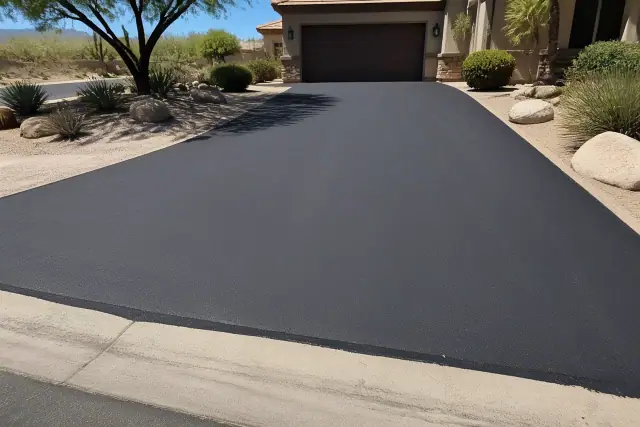
The existing asphalt layer over a firm aggregate base. This image helps make clear why surface wear can be overlaid but base movement cannot be ignored.
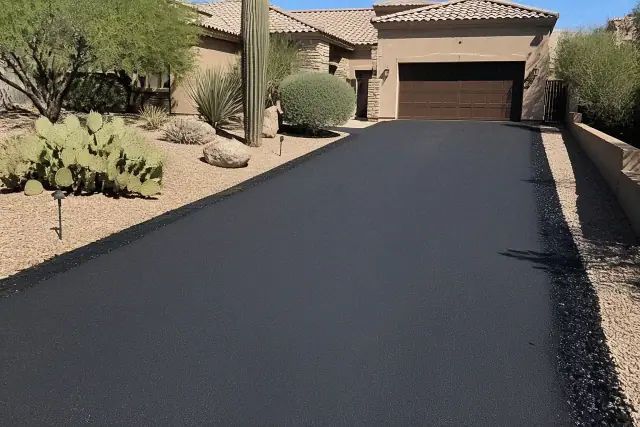
Routed and cleaned cracks, a dry surface, and tack coat before the new mat. Those steps are what help the overlay adhere.
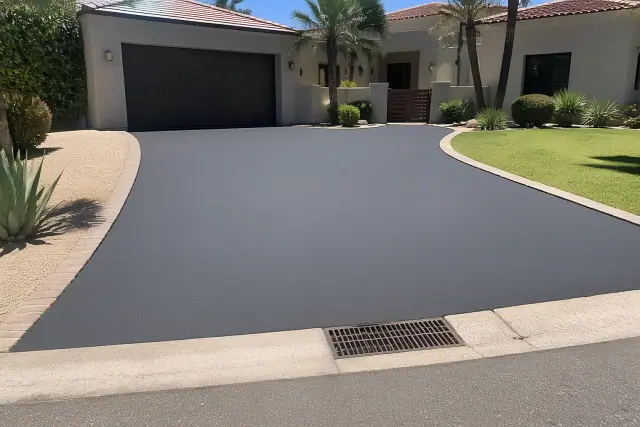
Standing water, deep potholes, or alligator cracking as warning signs. Those conditions usually need correction before overlay is considered.
A stable base, good drainage, minor rutting, oxidation, or shallow cracks can support overlay after problem spots are repaired.
Debris, vegetation, loose material, and moisture must be removed before tack coat; porous or heavily oxidized surfaces may also need primer or bonding agent.
Deep potholes, base heaving, wide alligator cracking, washed-out aggregate, or recurring drainage trouble should be evaluated for full-depth replacement.
Overlay can cost 30 to 50 percent less than full-depth replacement, but it inherits the old base condition and usually does not last as long.
| Pavement condition | Overlay fit | Best next action |
|---|---|---|
| Surface wear, oxidation, or cracking under about 1/3 the pavement depth | Often a good candidate when the base is stable and drainage is working | Repair cracks, clean the surface, apply tack coat, and pave 1.5 to 2 inches |
| Alligator cracking, potholes, heaving, or washed-out aggregate base | Overlay is likely to reflect the same failure through the new mat | Evaluate full-depth replacement and correct the base problem first |
| Standing water or poor grading | Water can shorten overlay life and weaken the subbase | Correct slope and drainage paths before any new asphalt goes down |
| Sound concrete slab under the planned asphalt | Possible, but bonding prep usually raises the per-square-foot cost | Budget roughly $3 to $7 per square foot when the slab is suitable |
Pouring new asphalt over old asphalt is an overlay decision, not a patch or seal coat decision. If the old pavement still has a stable foundation, crews can repair cracks, correct low spots, apply tack coat, and compact a new mat instead of demolishing the whole section. If the base has shifted, stayed wet, or broken apart, adding asphalt on top only hides the failure until it reflects through.
The answer changes with crack depth, drainage, base quality, surface oxidation, access for paving equipment, overlay thickness, and the traffic the pavement has to carry. Standing water is the number one reason asphalt fails early, and Scottsdale's desert heat plus seasonal monsoon runoff make grading and compaction more important than a cosmetic top layer. Since Scottsdale incorporated in 1951, local driveways, roads, and commercial lots have aged through decades of sun and runoff, but base stability and drainage still decide whether overlay makes sense.
The most common follow-ups are whether new asphalt will adhere, how much overlay costs, and whether a driveway should be overlaid or replaced. Adhesion requires a clean, dry, structurally sound surface plus tack coat; pricing in the Scottsdale area generally runs $2 to $7 per square foot for asphalt-over-asphalt and $3 to $7 per square foot for asphalt over concrete. A residential driveway overlay may be completed in a single day when conditions are straightforward, but base failure, alligator cracking, potholes, or drainage problems push the discussion toward full-depth replacement.
Share what you see: cracks, potholes, drainage, traffic, and whether the surface is asphalt or concrete. A local asphalt team can help decide whether overlay, repair, or full-depth replacement is the right next action before you approve work.