1-3 Year Interval
Use 1-3 years as the baseline, then tighten the schedule for heavy vehicle traffic or surfaces that take direct desert sun.
Scottsdale Asphalt generally recommends using a 1 to 3 year crack sealing window for Scottsdale driveways and parking lots, then adjusting for traffic, crack width, sun exposure, and pavement condition. High-traffic commercial areas often need attention every 1-2 years, while many residential driveways fall closer to every 2-3 years. The goal is to seal cracks before monsoon water, heat cycles, and oxidation turn a small opening into base damage.
Use 1-3 years as the baseline, then tighten the schedule for heavy vehicle traffic or surfaces that take direct desert sun.
Daily traffic, Arizona UV exposure, pavement age, drainage, and crack width all change how soon sealant should be renewed.
Walk the pavement each year, especially before monsoon season, so new cracks can be sealed before water reaches the base.
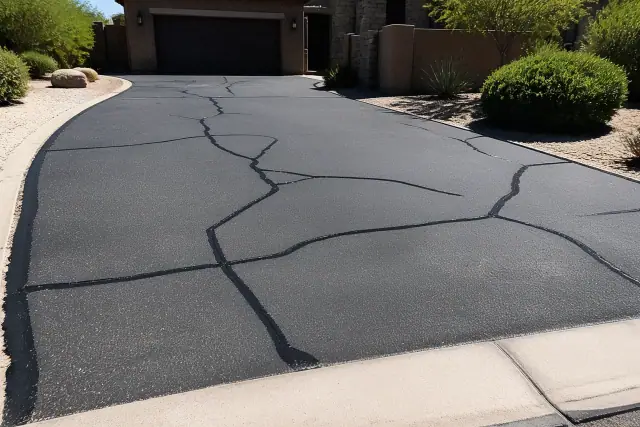
These cracks are usually the best candidates for sealing. Once openings get wider or show alligatoring, sealant alone may not solve the underlying pavement problem.
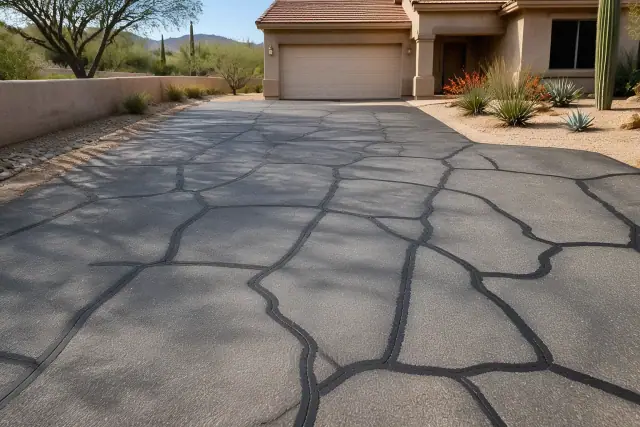
Commercial drive lanes, delivery areas, and shared parking surfaces flex under repeated loading. Those areas often move toward the 1-2 year side of the maintenance range.
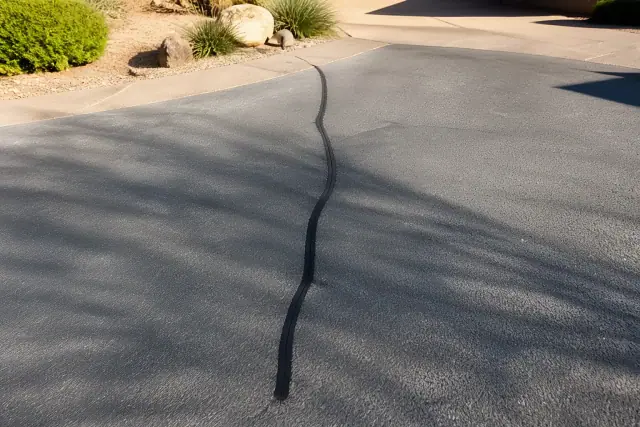
A clean, dry crack channel helps rubberized hot pour material bond. Dirt, debris, or trapped moisture can shorten the life of the repair.
A typical Scottsdale driveway can often go 2-3 years between crack sealing treatments when new cracks are caught early.
Parking lots and shared-use areas with daily traffic usually need a shorter 1-2 year crack sealing cycle.
Cracks between 1/4 inch and 1.5 inches are usually sealable, while wider cracks or alligatoring can point to base failure.
Fall through early winter is usually a good Scottsdale window because temperatures are still warm enough for proper curing.
| Situation | Suggested Timing | Why It Matters |
|---|---|---|
| Residential driveway with normal wear | Every 2-3 years, with annual visual checks | New cracks can be sealed before monsoon water reaches the base course. |
| High-traffic parking lot or shared drive | Every 1-2 years | Daily vehicle loading flexes the pavement and can reopen hairline cracks sooner. |
| Cracks wider than 1.5 inches or alligatoring | Inspect before sealing | The surface may need patching or milling instead of sealant alone. |
| Fall through early winter scheduling | Often a strong Scottsdale window | Warm curing conditions help sealant set before winter rain and heavier holiday traffic. |
The 1-3 year range is a maintenance planning window, not a fixed calendar rule. Professionally applied crack seal may last 3-7 years, but Scottsdale sun, traffic, drainage, and new cracking determine when the next treatment is actually needed.
Traffic volume, direct UV exposure, pavement age, crack width, sealant type, and water flow all affect the interval. Scottsdale surfaces may not face northern freeze-thaw cycles, but 115-degree summer days, cool desert nights, and monsoon rain can still accelerate oxidation and moisture intrusion.
If you are setting a crack sealing schedule, the next questions are usually how long the seal lasts, how sealcoating fits in, and whether the season is right. Hot pour crack seal can last 3-7 years when the crack channel is prepared well, sealcoating is usually a separate 2-3 year surface treatment, and October is generally still workable in Scottsdale when curing conditions stay warm.
Share the crack width, surface type, traffic pattern, and last sealing date if known. A local crew can inspect the pavement and recommend whether sealing, patching, drainage correction, or resurfacing fits the condition.