Repair When Base Is Sound
Hairline cracks, minor edge damage, and small isolated potholes can often be repaired when the driveway is younger and the compacted aggregate below it still supports the surface.
At Scottsdale Asphalt, driveway repair versus replacement starts with age, damage spread, and whether the base below the surface is still sound. This guide explains when repair, overlay, or full replacement makes sense for Scottsdale-area driveways before you approve work.
Hairline cracks, minor edge damage, and small isolated potholes can often be repaired when the driveway is younger and the compacted aggregate below it still supports the surface.
Widespread alligator cracking, rolling dips, crumbling corners, and potholes that reopen in the same spot usually point to base failure rather than a surface-only problem.
Document the age, damage pattern, water flow, and affected square footage before comparing a patch, mill-and-fill overlay, or full tear-out.
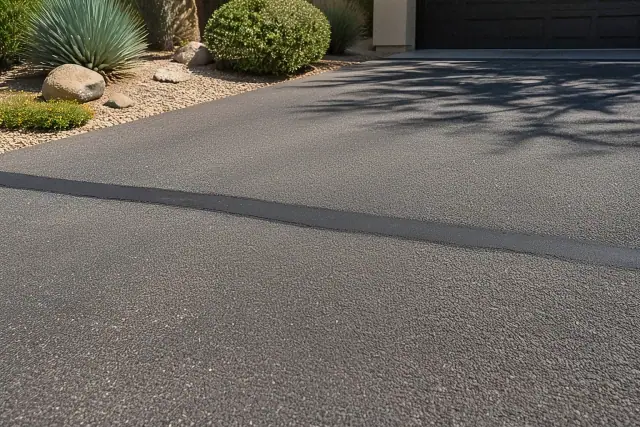
Contained cracks or a small pothole on a driveway where the surrounding surface is still level. This is the type of condition that often supports a focused repair.
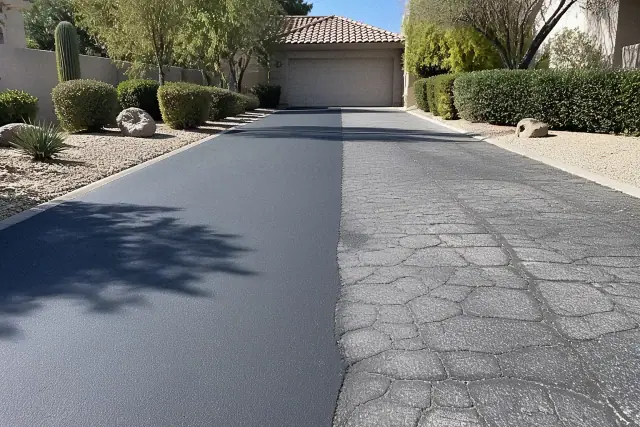
Connected cracking across a broad area, visible dips, or crumbled edges. These clues help explain why a short-term patch may not hold.
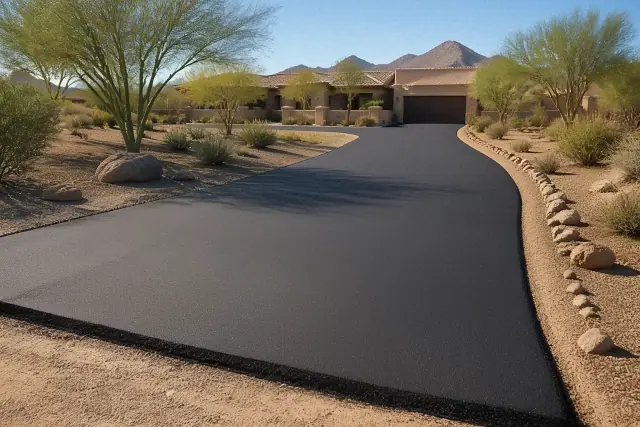
A close inspection of edges, water flow, and low spots near the driveway. Drainage and base movement are often what separate repairable damage from replacement-level failure.
A younger driveway with contained cracks, minor edge damage, or a single small pothole usually deserves a repair recommendation first.
Once age, cracking, sinking, and damage spread point past the repair window, replacement is often the more cost-effective long-term choice.
When the base is still solid but the asphalt surface is aged, oxidized, or moderately cracked, a mill-and-fill overlay may add 8-10 years of service life.
Avoid repeated patching when water flow, base compaction, or reopening potholes are driving the damage. The underlying cause needs to be addressed before new material goes down.
| Decision Check | Repair Usually Fits | Replacement Usually Fits |
|---|---|---|
| Age | Under 10 years with a sound base | Past 15-20 years with recurring failures |
| Damage spread | Isolated cracks, edge damage, or one small pothole | More than 25-30% of the surface is cracked or sinking |
| Base condition | Edges hold, drainage is controlled, and the base has not shifted | Alligator cracking, rolling dips, repeated potholes, or multiple sunken areas |
| Typical asphalt cost | $3-$7 per square foot for repair or overlay scope | $8-$15 per square foot when excavation and base work are needed |
The practical answer is to repair surface-level damage while the base is sound, resurface when the top 1.5 to 2 inches are worn but the structure still holds, and replace when the base has failed. A proper patch or crack seal can hold for 3-5 years, a mill-and-fill overlay can add 8-10 years, and a correctly built new asphalt driveway with a 4 to 6-inch aggregate base should perform for 20-30 years before replacement is needed again.
Scottsdale conditions make timing important: summer surface temperatures that regularly exceed 140 degrees, UV exposure, and monsoon runoff can widen small cracks and accelerate oxidation. Concrete follows the same age-and-damage logic but often costs more per square foot, with patch or joint repair commonly listed at $300-$1,200 and full concrete replacement at $10-$18 per square foot. Sealcoating every 2-3 years helps protect asphalt, but it will not fix structural cracking or base failure.
Homeowners usually ask whether a 12-15 year old driveway can still be repaired, how long replacement takes, and what drives the final quote. A solid-base driveway at that age may still get 5-8 more years from an overlay, while a standard asphalt replacement usually takes 2-4 days and concrete often needs 5-7 days before regular traffic. Base condition is the biggest cost driver, and permeable pavers or porous asphalt may be worth discussing where monsoon runoff and water pooling are part of the problem.
Send a few details about your driveway age, damage pattern, and drainage concerns. A free driveway assessment can help confirm whether a patch, overlay, or full replacement is the honest recommendation for your surface.