Asphalt for Standard Areas
Asphalt usually makes the most sense for Scottsdale retail centers, apartment complexes, HOA lots, and drive aisles because it costs less upfront and flexes through heat-related movement.
Scottsdale Asphalt recommends asphalt for most standard Scottsdale parking lot areas and concrete for high-load or high-heat zones. The better choice depends on traffic load, budget, drainage, soil conditions, and how long you plan to own the property. This guide compares cost, lifespan, maintenance, and durability so you can choose the right surface before committing to a project.
Asphalt usually makes the most sense for Scottsdale retail centers, apartment complexes, HOA lots, and drive aisles because it costs less upfront and flexes through heat-related movement.
Concrete is stronger for loading docks, dumpster pads, heavy truck lanes, and entrance areas where static loads, petroleum exposure, or heat softening matter more than upfront cost.
The right recommendation should start with soil conditions, drainage, projected traffic load, base condition, and whether resurfacing would solve the problem without full replacement.
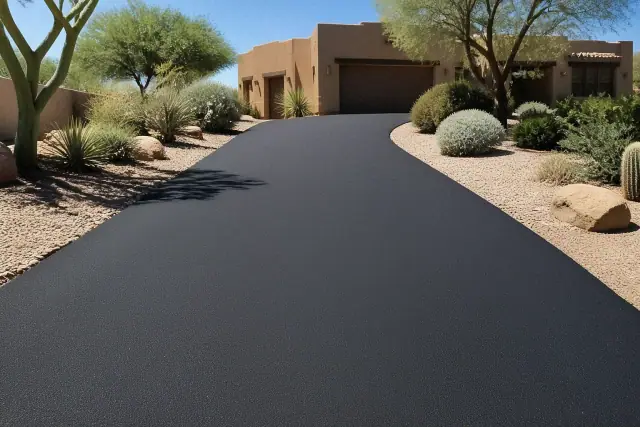
A standard asphalt field helps illustrate why flexible pavement is often the value pick for everyday traffic. The key visual is a broad drive aisle, not a heavy-load pad.
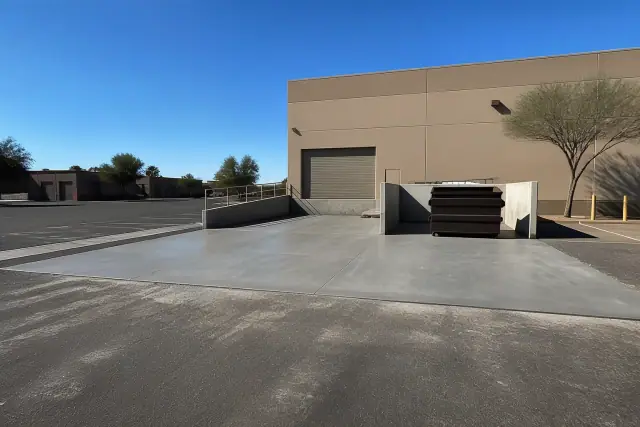
A concrete pad shows where rigid pavement earns its higher cost. Heavy truck lanes, dumpster areas, and loading zones need resistance to rutting and heat softening.
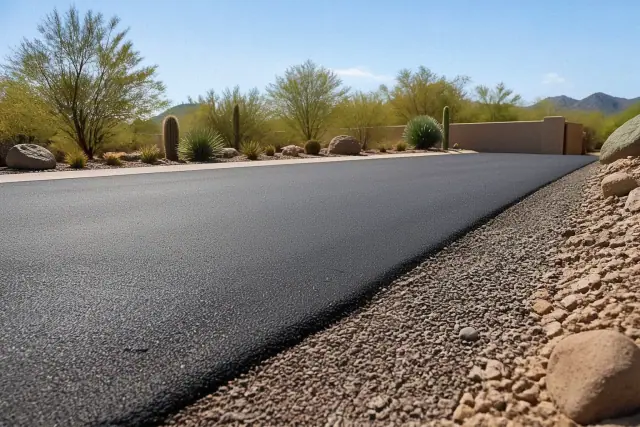
A base-prep visual should show grading, drainage, and compacted aggregate below the surface. Those details decide whether asphalt resists potholes and alligator cracking over time.
Start with asphalt for standard traffic areas when lower upfront cost, quicker installation, repairability, and flexible performance are priorities.
Choose concrete for heavy stationary loads, truck lanes, high-heat exposure, better wet footing, petroleum stain resistance, or long-lasting pavement markings.
Asphalt needs routine sealcoating and crack sealing, while concrete usually needs less frequent service but more expensive joint, spall, or slab repairs when problems appear.
Avoid choosing by price alone; a poorly compacted base, bad drainage, or unsealed cracks can shorten asphalt life, while a shifting subgrade can crack concrete.
| Decision factor | Asphalt usually fits when | Concrete usually fits when |
|---|---|---|
| Budget | You need a surface that is about 30 to 40 percent cheaper upfront. | You can justify roughly $4 to $7 per square foot for longer service life. |
| Use area | The space is a standard drive aisle, retail lot, apartment lot, or HOA lot. | The space handles loading docks, dumpster pads, heavy truck lanes, or high-heat exposure. |
| Maintenance plan | You can sealcoat every two to three years and keep cracks sealed. | You prefer less frequent maintenance and can budget for joint sealing, spall repair, or slab replacement when needed. |
| Reopening timeline | You need faster return to traffic, often within 24 to 48 hours after paving. | You can wait seven days minimum before full traffic loading. |
Concrete is not automatically better because it lasts longer, and asphalt is not automatically better because it costs less upfront. For standard Scottsdale parking-lot traffic, asphalt often gives the best balance of cost, installation speed, repairability, and flexibility. Concrete belongs in specific zones where heavy stationary loads, heat softening, or visible entrance durability justify the higher initial investment.
Traffic load, ownership timeline, drainage, and base prep should carry more weight than a generic material preference. A properly compacted aggregate base and grading that moves water toward drains help asphalt resist alligator cracking and potholes, while concrete needs stable subgrade and joint maintenance to deliver 20 to 40 years of service. On mixed commercial lots, a concrete apron with an asphalt field can be the practical middle ground.
Owners usually ask how long each surface lasts, how often asphalt must be sealed, how quickly the lot can reopen, and whether a full replacement is necessary. The practical answer is that concrete can last 20 to 40 years but costs more and cures longer, asphalt often costs less and can return to traffic within 24 to 48 hours, and resurfacing may be enough when the base and drainage are sound. Heavy truck areas, dumpster pads, loading docks, and high-heat zones are the places to compare concrete more seriously.
Share the traffic load, drainage concerns, and maintenance goals for the lot. Scottsdale Asphalt can walk the property, compare asphalt and concrete options, and recommend the surface plan that fits the actual use case.