Add vs. Remove First
Overlay adds hot mix asphalt over a pavement surface that still has structural integrity. Resurfacing removes damaged asphalt first, often by milling, so the new layer starts on a corrected surface.
An asphalt overlay adds a new layer of hot mix asphalt over existing pavement, while resurfacing removes a damaged layer before new asphalt goes down. At Scottsdale Asphalt, this question usually comes down to how deep the damage goes, whether the base is still sound, and whether drainage or grading needs correction.
Overlay adds hot mix asphalt over a pavement surface that still has structural integrity. Resurfacing removes damaged asphalt first, often by milling, so the new layer starts on a corrected surface.
Minor surface cracking, light rifts, and early pothole formation can be overlay candidates. Extensive alligator cracking, uneven grading, moisture damage, or rutting means the problem is deeper than the surface.
Grade, drainage flow, and base condition should be checked before choosing either option. In Scottsdale, heat cycles and monsoon runoff can expose weak drainage or base problems quickly.
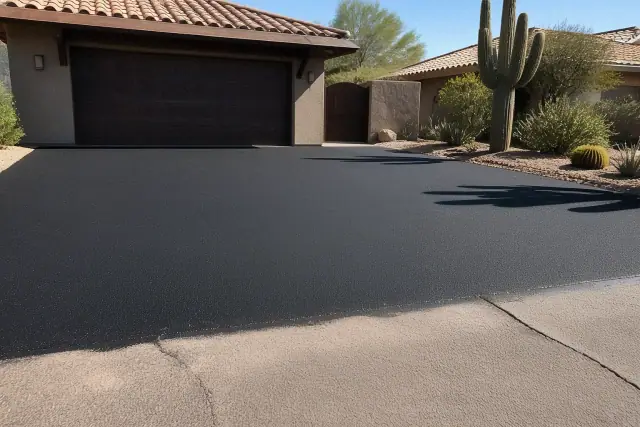
This visual should show a worn but stable driveway or lot with surface-level cracking. The key detail is that the base underneath still supports traffic loads.
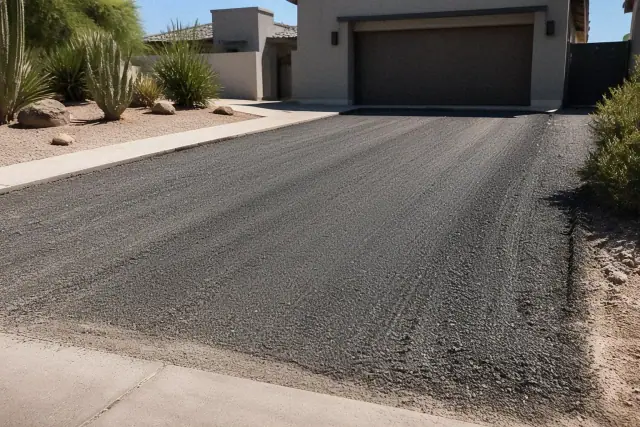
This image helps show the damaged top layer removed before paving. Milling gives the crew a cleaner profile for correcting grade, slope, and surface irregularities.
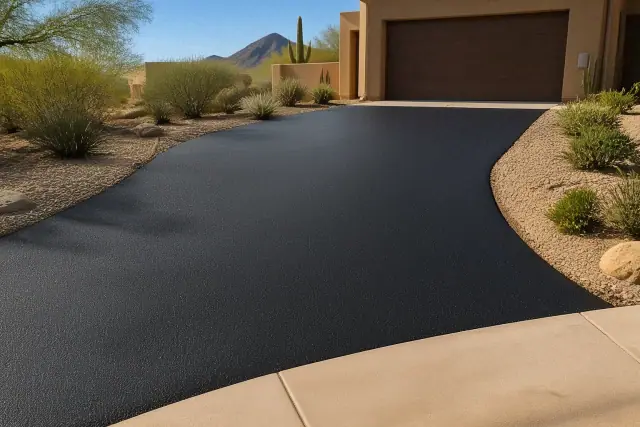
This image helps make ponding, curb transitions, garage clearance, or low spots easy to see. Overlay adds height, so drainage and transitions matter before any new layer is placed.
Start by deciding whether the damage is surface-level or structural. A sound base can support overlay, while base failure, repeated cracking, or widespread alligator cracking needs a deeper scope.
Overlay is usually faster because it skips milling and disposal. Resurfacing costs more because square footage, milling depth, base repair, equipment access, and hauled-off material all affect the final scope.
Standing water after monsoon storms, visibly rutted pavement, and broad alligator cracking should be evaluated before another surface layer is approved. Those signs often point to drainage or base problems.
Avoid overlaying pavement when the base is compromised, because cracks can reflect through the new surface within a year or two. Also avoid ignoring added pavement height at curbs, garage doors, sidewalks, or other transitions.
| Pavement Condition | Usually Points To | Why It Matters |
|---|---|---|
| Surface cracking, light rifts, or early pothole formation on a sound base | Overlay | A new 1.5 to 2 inch wear layer can be placed after cleaning, patching, tack coat, and compaction. |
| Alligator cracking, rutting, standing water, or an uneven profile | Resurfacing | Milling the top 1-3 inches lets the crew correct grade, inspect the base, and place new asphalt. |
| Base failure or poor soil conditions | Replacement discussion | Overlay or resurfacing can delay the problem if the pavement structure itself has already failed. |
Overlay is the lighter maintenance option when the pavement structure is still doing its job, and it can cost 30-50% less than full replacement. Resurfacing sits between overlay and replacement because it removes damaged material, allows base inspection, and restores the surface profile without rebuilding everything from the subgrade up.
The recommendation changes with damage depth, maintenance history, drainage, slope, site access, and how much base repair is found after old material comes up. Scottsdale pavement also has to handle summer surface temperatures that regularly exceed 140 degrees, UV exposure, and intense monsoon downpours that can push water into weak spots.
The next questions are usually about cost, lifespan, and whether replacement is necessary. Overlay commonly lasts 8 to 15 years on a sound base and often costs $2-$7 per square foot; resurfacing commonly lasts 15 to 20 years and often costs $3-$10 per square foot because milling, disposal, and base correction are part of the scope. If the base has failed, replacement may be the better conversation because neither overlay nor resurfacing fully rebuilds the pavement structure.
Send a few details about your driveway or parking lot, including cracking, ponding, rutting, or recent maintenance. A local asphalt team can inspect the surface, base condition, drainage, and transitions before recommending overlay, resurfacing, or a larger repair.