Compaction Sets Patch Life
The critical step is mechanical compaction, especially between lifts on deeper holes. Industry pavement standards generally call for compacted asphalt to reach around 92-96 percent of theoretical maximum density.
Scottsdale Asphalt builds pothole repairs around compaction because a patch that looks clean on day one can still sink, crack, or pop loose within weeks if the base and asphalt lifts are not compacted before the surface is finished.
The critical step is mechanical compaction, especially between lifts on deeper holes. Industry pavement standards generally call for compacted asphalt to reach around 92-96 percent of theoretical maximum density.
A compacted patch still needs clean vertical edges, a dry base, tack coat on the cut sides, and drainage that keeps water from undermining the repair.
Deeper potholes should be filled in controlled lifts, not dumped full and tamped only from the top. Each lift needs compaction before the next layer goes in.
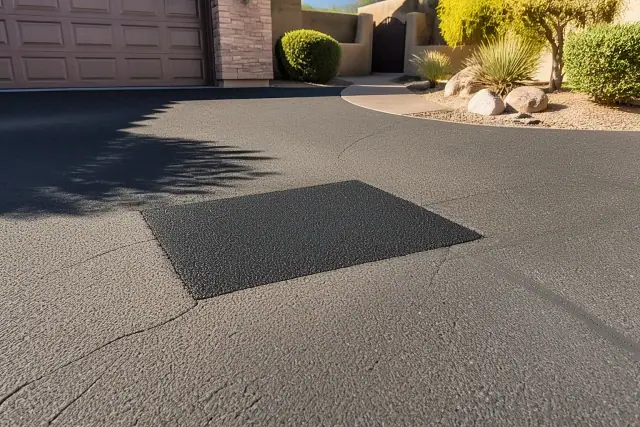
This image helps show straight vertical edges cut a few inches beyond visible damage. A ragged feathered edge gives the patch a weak boundary that can keep spreading.
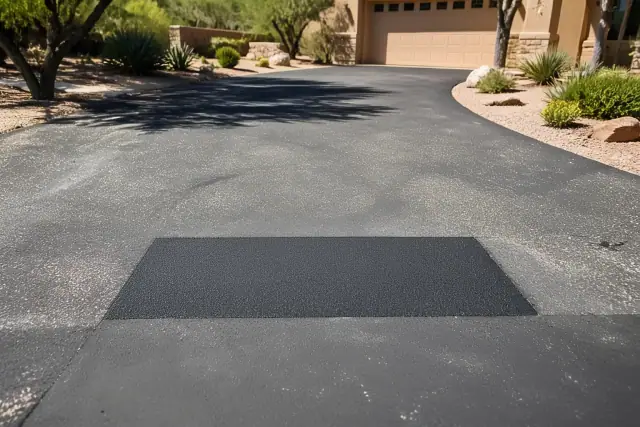
This image helps show loose gravel, standing water, dust, and deteriorated asphalt removed before new material goes in. Tack coat on the cut edges helps the new asphalt bond instead of separating at the seam.
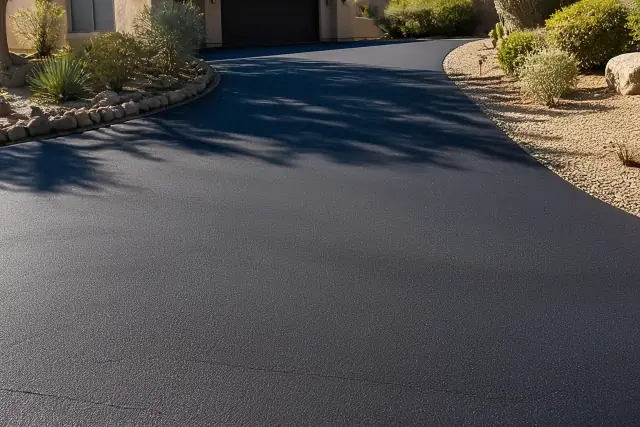
This image helps show a vibratory plate compactor or roller compacting asphalt in layers. The finished patch should sit flush or slightly crowned to allow for traffic settlement.
Compaction is what turns placed asphalt into a dense patch that can resist water and traffic. Without it, air voids let the repair sink, crack, or pop loose early.
Edge squaring, debris removal, dust removal, dry surfaces, and tack coat all happen before compaction. Those steps give the compacted material a clean base and a bonded edge.
Caliche soil, intense summer heat, rapid surface temperature swings, and monsoon downpours can all stress a pothole repair. Drainage and base checks matter before the surface is finished.
Avoid dumping material into one deep hole and hand tamping only the top. Deeper repairs need lifts no thicker than about 2-3 inches so density reaches the bottom.
| Repair Condition | What It Means | Recommended Action |
|---|---|---|
| Shallow or temporary cold patch | Cold patch can buy weeks to a few months, especially for small holes. | Clean the hole, compact firmly, and plan a more durable repair if traffic or water keeps returning. |
| Full-depth hot mix repair | Properly compacted hot mix can last several years when the base is stable. | Square the edges, tack the sides, place material in lifts, and compact each lift. |
| Deep or unstable base | Loose, wet, or undermined base material prevents the patch from holding density. | Excavate to sound base before placing lifts no thicker than about 2-3 inches. |
| Water or drainage issue | Pooling, runoff, or trapped moisture can reopen the same pothole. | Check grade, nearby drainage, and the surrounding pavement before finishing the patch. |
Compaction is the difference between filling a visible hole and rebuilding the support under the driving surface. Cold patch repairs are useful as temporary or short-term fixes, but hot mix asphalt placed over a stable base and compacted while workable is the stronger long-term repair.
The right pothole repair scope depends on size, depth, urgency, traffic load, base stability, water exposure, and material choice. Small holes may accept cold patch for a short period, while parking lot repairs, deep failures, and saturated bases need a more controlled sequence with saw-cut edges, tack coat, lifts, and vibratory plate or roller compaction.
Common follow-up questions usually come down to cost, material choice, and whether the hole is only a surface problem. Typical ranges are $100-$200 per hole for cold patch pothole repairs and $150-$750 for full-depth hot mix repairs, depending on size and depth, but the repair still needs clean edges, base assessment, drainage review, and proper compaction to hold.
Share the pothole size, depth, drainage conditions, and whether the same spot has failed before. A local asphalt team can help decide whether the repair needs temporary patching, hot mix, deeper base work, or lift-by-lift compaction.